
Socialising Pomsky puppies
Our Pomsky puppies are born in our home, in a purpose-made whelping room, not in a kennel block. Their socialisation and their flourishing matter enormously to us from the very first moments of their lives: the first two months beside us are full of cuddles and learning.
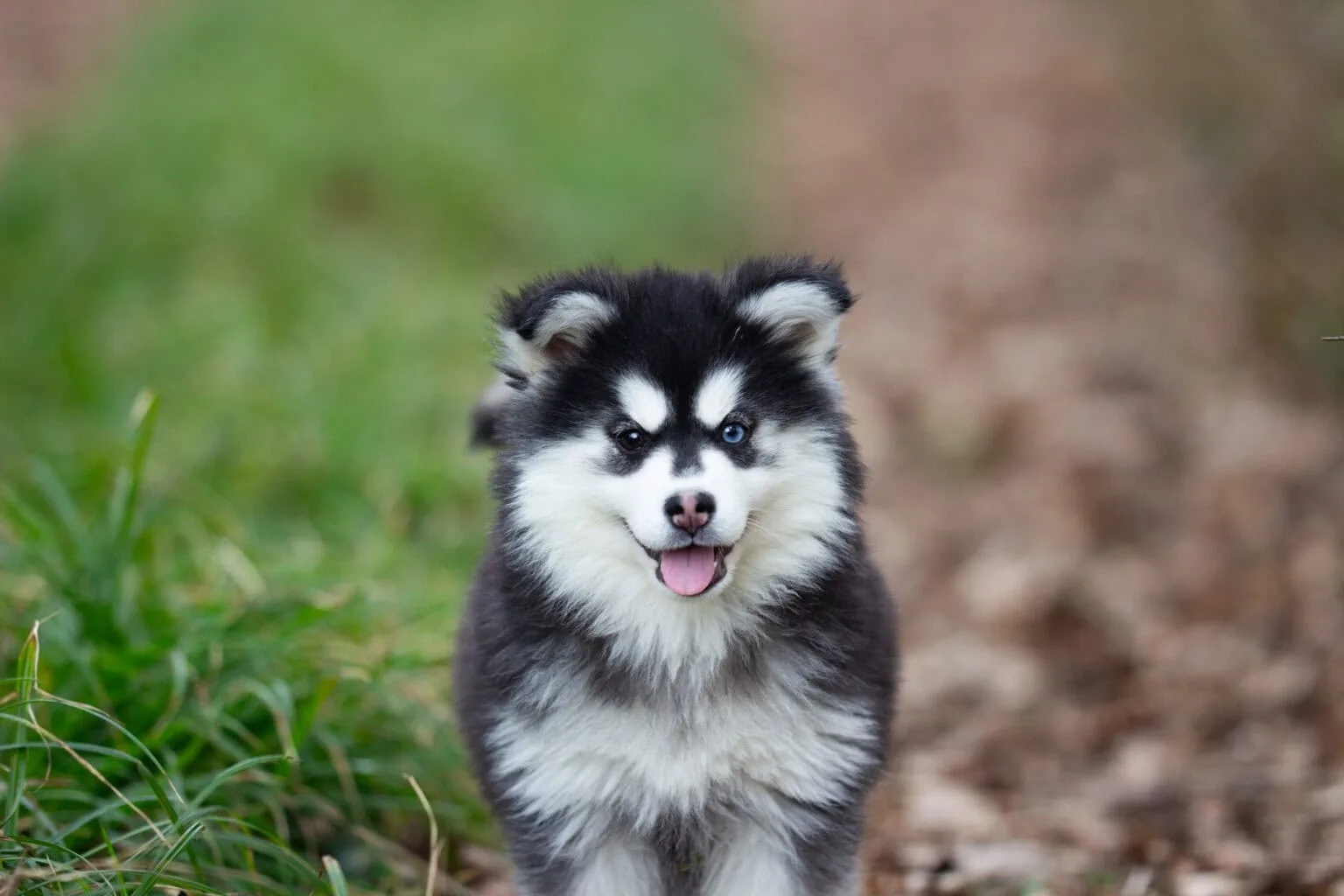
Early neurological stimulation
From their first days of life, our puppies are handled daily and follow an early neurological stimulation programme. This approach has a demonstrated effect on cardiovascular performance, heart rate regulation, tolerance of stress and response to infectious disease in adulthood.
Discovering the world step by step
Our puppies gradually discover a range of textures, smells and sounds. They are around children and other animals from a very young age, in a family setting where they feel safe. This groundwork is fundamental: the socialisation window, from birth to three months, is considered decisive in building a balanced dog.
No cages, no kennel runs
Our puppies are never raised in kennel runs or training crates. They grow up free to roam our house and garden, surrounded by the adult dogs of the kennel and by our family, which encourages them to learn canine and human social codes naturally.
Support that continues after adoption
Socialisation does not stop when a puppy leaves: we stay available to guide you through the first weeks at home, the key period for consolidating what they learned at the kennel and for carrying on opening your Pomsky up to the world with confidence.
Frequently asked questions
At what age does socialising a Pomsky puppy begin?
From their first days of life. We use early neurological stimulation and a gradual discovery of textures, smells and sounds, well before a puppy leaves for their family.
Why does socialisation between birth and three months matter so much?
It is the period during which a puppy builds their social and emotional bearings. Successful socialisation at that age largely determines how balanced the adult dog will be, how well they cope with frustration, and how at ease they are with children, other animals and strangers.
How do I carry on socialising once my puppy is home?
By continuing gradual, positive exposure: new people, environments, sounds, other dogs. Avoid overprotecting them and let them discover the world at their own pace, always with positive reinforcement.