
The kennel journal
Does the Generation Affect a Pomsky's Size?
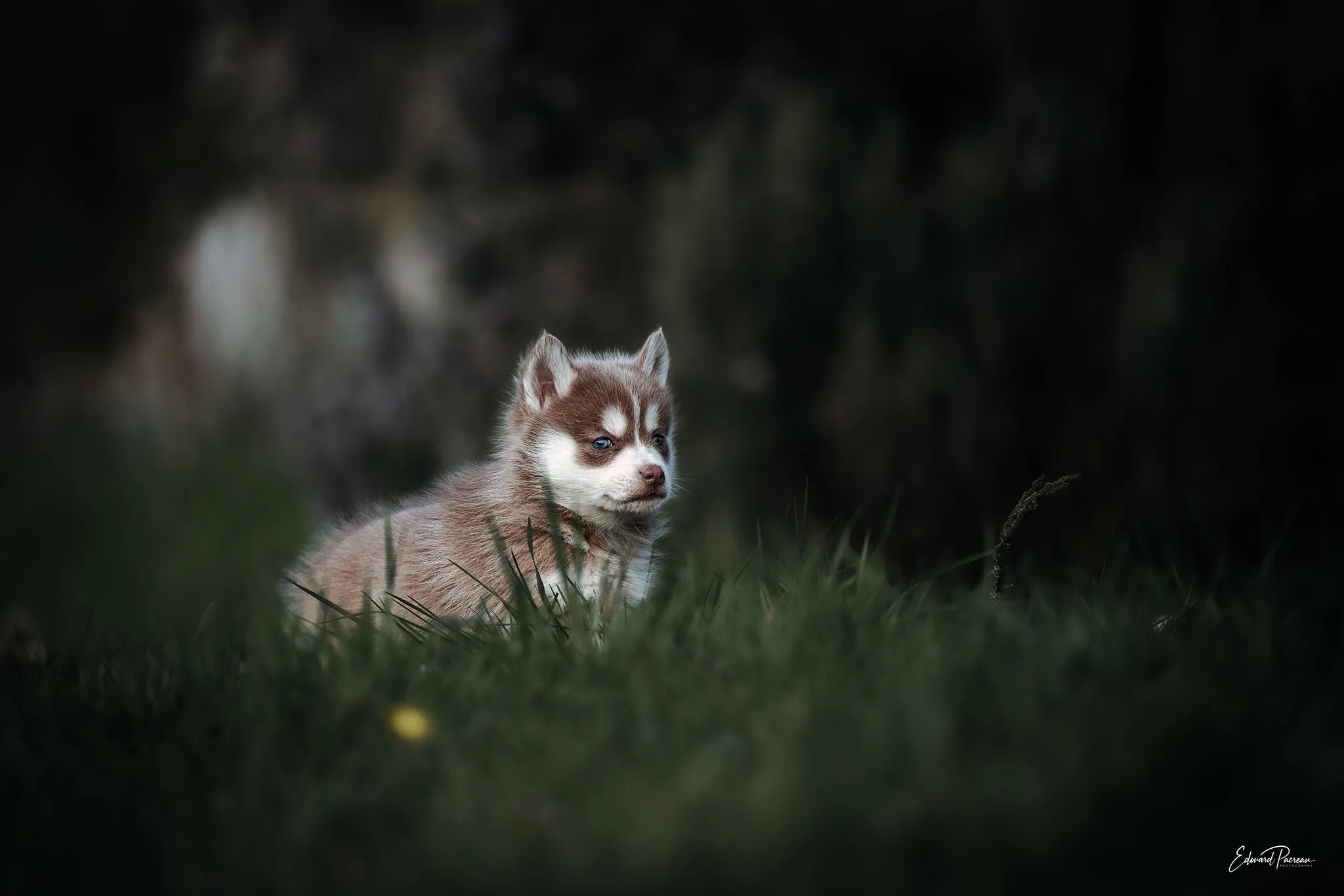
Have you heard about generations in the Pomsky? Are you after a small Pomsky, and therefore looking for an F3 or an F4? Is the generation actually linked to your Pomsky’s size? Well, no — not quite.
A lot of breeders have tended to simplify things by saying that the further along the generations you go, the smaller the Pomsky gets. That is not entirely accurate.
The different generations
It all starts with the first generation, also called F1, which is a cross between a Husky and a Pomeranian.
Then comes the second-generation Pomsky, called F2, born from a cross between:
- Two first-generation Pomskies (F1 * F1)
- A first-generation Pomsky and a second-generation Pomsky (F1 * F2)
Then the third-generation Pomsky, called F3:
- Two second-generation Pomskies (F2 * F2)
- A second-generation Pomsky and a third-generation Pomsky (F2 * F3)
To learn more about the Pomsky and its generations, you can read our other blog post: Pomsky generations F1, F2, F2B — can someone explain?
So does the generation influence size?
No, you cannot determine a Pomsky’s size from its generation, because everything depends on the selection the breeder has made and the build they are working towards. Not every Pomsky breeder is aiming to produce a 4 kg mini Pomsky by the fourth generation.
Pomsky size is genuinely hard to pin down. In the first generation, the size of the Husky mother and of the Pomeranian father both influence the size of the puppies. You can end up with puppies of 5 kg or puppies of 14 kg. Within a single Pomsky litter, the variation can be just as dramatic, with puppies differing twofold in weight.
So it is essential to choose your breeder carefully and to talk to them as much as you can. A conscientious breeder knows their lines and will be able to point you towards a puppy that matches your criteria.