
The kennel journal
Miniature American Shepherd vs Pomsky: Characteristics, Temperament and Specific Needs
Introduction
Dogs are incredible companions, but choosing the breed that best suits your lifestyle can be a challenge. The Miniature American Shepherd and the Pomsky are two popular but very different breeds, attracting prospective owners for a variety of reasons. The Miniature American Shepherd is valued for its hard-working character and its intelligence, while the Pomsky, a mix between a Husky and a Pomeranian, appeals through its “mini Husky” looks and its playful nature. In this article we will explore the physical particularities, character traits, exercise needs and specific care requirements of each breed, to help you make the best choice.
- Origins of the breeds
Miniature American Shepherd: The Miniature American Shepherd descends directly from the Australian Shepherd, developed in the United States in the twentieth century for its working instinct and its ability to herd livestock. In the 1960s, breeders selected the smallest specimens to create a more compact version. The breed retains the Australian Shepherd’s dynamic, intelligent temperament, but in a format better suited to domestic and urban environments.
Pomsky: The Pomsky is a recent hybrid, born from the cross between a Siberian Husky and a Pomeranian. This mix produces dogs with unique traits, combining the Husky’s captivating appearance with the Pomeranian’s small size and affectionate temperament. The first Pomskies appeared in the 2010s, mainly in the United States. Because of its hybrid origin, the breed is still developing, and Pomsky characteristics can vary according to the lines.
- Physical characteristics
Height and weight:
- Miniature American Shepherd: it generally measures between 33 and 46 cm at the withers and weighs between 7 and 18 kg. Despite its reduced size, it retains solid bone and an athletic appearance.
- Pomsky: Pomskies vary in height and weight according to the cross, but they generally measure between 28 and 45 cm and weigh between 4 and 18 kg. Their size often depends on whether the Husky or the Pomeranian parent is dominant in the mix, and also on the line.
Coat:
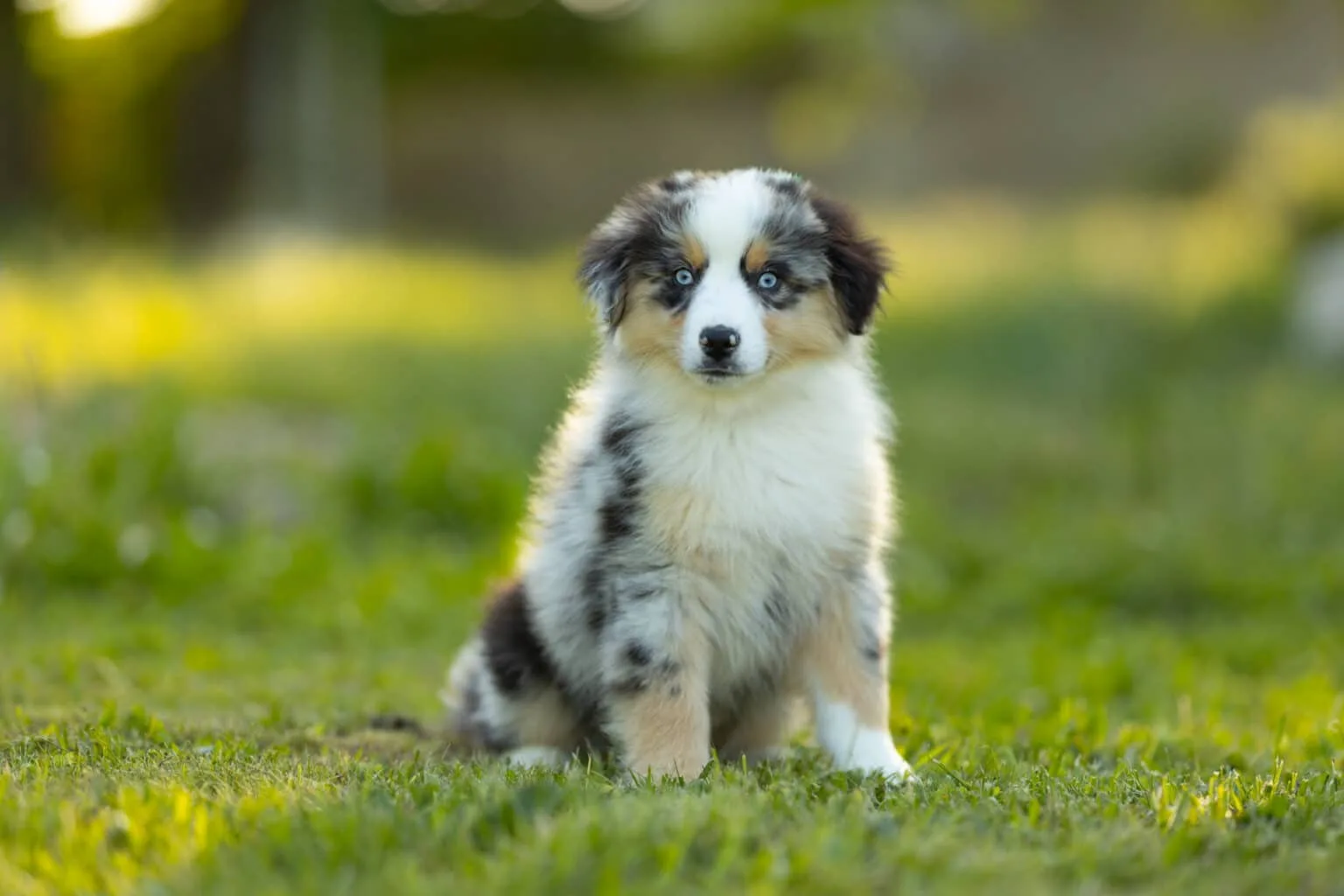
- Miniature American Shepherd: it has a dense double coat, often of medium length, designed to withstand the weather. Its colours can be varied, from black and white to blue merle, red merle and red tricolour.
- Pomsky: the Pomsky’s coat is also dense and can be long or short, often fluffy like the Pomeranian’s. Typical colours include black and white, grey and white, and other combinations inspired by the Husky. To these are added what are known as exotic colours: lilac, blue, silver.
General appearance:
- The Miniature American Shepherd has a sturdy appearance, with herding-dog features, an expressive gaze and a proud carriage of the head. Its ears are dropped.
- The Pomsky is more variable, but the most sought-after examples have the appearance of a Husky in a smaller format, with striking blue or heterochromatic eyes, a characteristic inherited from the Husky.
- Temperament and personality
Miniature American Shepherd:
- The Miniature American Shepherd is an intelligent, lively and loyal dog. It is naturally close to its owners and loves activities that stimulate its mind and its body. It is a genuinely devoted dog with a thirst for learning and discovery.
- Its herding instinct sometimes makes it protective and reserved with strangers, but it remains sociable with good socialisation from a young age.
- Miniature American Shepherds are often very attached to their family and get on well with children, although they may sometimes show a tendency to “gather” the children, typical of their herding instinct.
Pomsky:
- The Pomsky inherits the Husky’s playful, mischievous side, while often having the Pomeranian’s affectionate temperament. Being a hybrid, however, its character can vary from one dog to another.
- It is generally sociable, loves to play, and is an energetic companion that becomes strongly attached to its owners.
- Although the Pomsky can be very cuddly, its Husky side can make it a little independent. Good training and early socialisation are essential to avoid anxious behaviour.
Comparing temperaments:
- The Miniature American Shepherd is more oriented towards work and cooperation, which makes it an obedient dog and easy to train. It suits active families looking for a faithful companion for outdoor activities. It does not like solitude, so it needs a family who are around and who want to add a genuinely devoted dog to the household.
- The Pomsky is less predictable but very affectionate and playful, an excellent companion for those looking for a dog with a playful temperament and captivating looks.
- Exercise and activity needs
Miniature American Shepherd:
- As a herding dog, the Miniature American Shepherd needs a great deal of exercise and mental stimulation. It is happy when it has a task to accomplish, whether that is agility, tracking or simply interactive games.
- A lack of exercise can lead to boredom, and even to destructive behaviour. It is therefore recommended to give it at least one to two hours of activity a day.
Pomsky:
- The Pomsky, although smaller, has inherited the Husky’s energy and also needs regular exercise. Its needs are, however, often somewhat lower than the Miniature American Shepherd’s.
- It enjoys walks, chase games and play sessions with its owners. About an hour of daily exercise is needed to keep it balanced.
Comparing exercise needs:
- The Miniature American Shepherd will better suit very active owners and those who enjoy spending time outdoors.
- The Pomsky is a good choice for owners looking for an active dog but with slightly more flexible exercise needs.
- Grooming and care
Coat and brushing:
- The Miniature American Shepherd needs regular brushing, especially during moulting season, to stop its undercoat matting.
- The Pomsky also needs frequent brushing to keep its coat in good condition and limit shedding, especially at the change of seasons.
General health:
- Miniature American Shepherd: this breed is generally robust but can be predisposed to certain hereditary conditions, such as hip dysplasia and eye problems.
- Pomsky: being a hybrid, the Pomsky often benefits from hybrid vigour, but it can nevertheless be subject to conditions inherited from the Husky or the Pomeranian, such as dental and eye problems.
Comparing care requirements:
- The Miniature American Shepherd and the Pomsky need similar coat care, but the Pomsky often requires closer attention to dental care, because of its Pomeranian ancestry.
- Compatibility with different lifestyles
Children and family:
- The Miniature American Shepherd is known for its patience and its affinity with children. Its calm temperament and its protective instinct make it an excellent family dog.
- The Pomsky, for its part, is also friendly and gets on well with children, although it can be more sensitive and independent. It is generally playful and lively with older children.
Apartment or house living:
- The Miniature American Shepherd, although it can adapt to apartment life, will be happier in a house with a garden or easy access to outdoor activities.
- The Pomsky is better suited to apartment life, but it will also appreciate access to the outdoors to burn off energy.
Level of experience:
- The Miniature American Shepherd may require a degree of training experience because of its herding instinct, but it remains accessible to families with a little time to devote to it.
- The Pomsky is often recommended for owners with some experience of dogs, because of its more independent nature and its sometimes unpredictable character.