
The kennel journal
Pomsky or Husky? The Key Differences Between These Magnificent Breeds
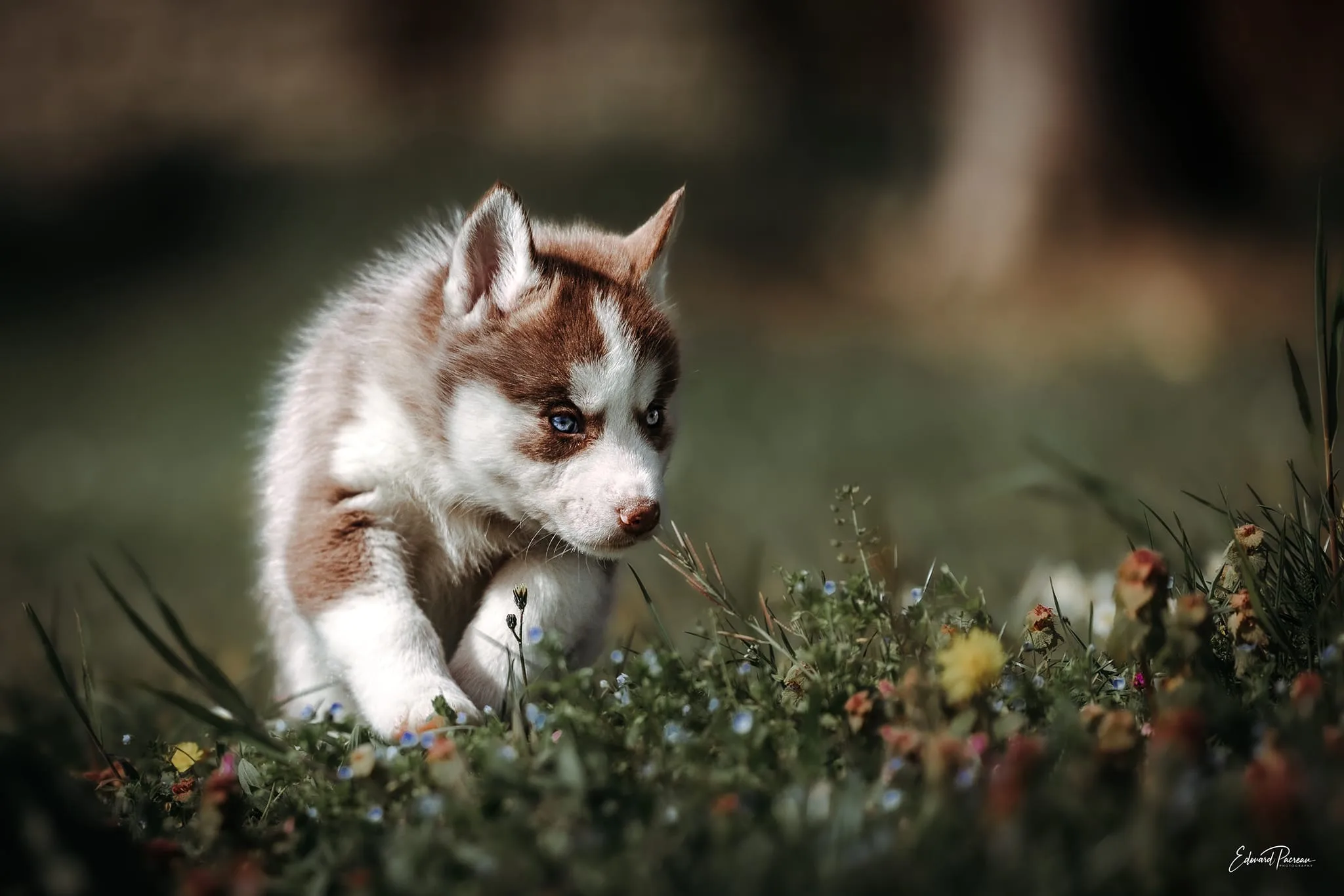
Torn between a Pomsky and a Husky? Here is what you need to know:
- The Husky is an ancient sled dog breed
- Pomskies are smaller and suited to apartments
- Huskies need plenty of space and exercise
Quick comparison:
| Criterion | Pomsky | Husky |
|---|---|---|
| Height | 25–38 cm | 50–60 cm |
| Weight | 9–14 kg | 16–32 kg |
| Exercise | Moderate | Intense |
| Grooming | Medium | High |
| Market price | €1,000–5,000 | €600–1,500 |
Both breeds are intelligent and energetic, but the Pomsky suits beginners in the city better, while the Husky is ideal for experienced owners with a large garden.
Related video from YouTube
Where do they come from?
The Siberian Husky comes from far away. It was born in Siberia more than 3,000 years ago. The Chukchi people created it to survive in extreme cold.
The Chukchi wanted a strong, clever dog. They selected Huskies to:
- Pull sleds
- Hunt
- Travel
A fine detail: Huskies can withstand -50°C.
In 1908, Huskies arrived in North America. They became stars in 1925 thanks to the serum run to Nome. Teams of Huskies covered 1,000 km in five days to save lives in Alaska.
The Pomsky? Entirely new. It all started in 2011 with a viral photo of a “mini Husky”.
Two American breeders had an idea: mixing a Husky and a Pomeranian. In 2012 the first genuine Pomskies were born in the United States.
Here is a quick comparison:
| Trait | Siberian Husky | Pomsky |
|---|---|---|
| Origin | Siberia | United States |
| Born | 3,000+ years ago | 2012 |
| Creators | The Chukchi | Modern breeders |
| Purpose | Working dog | Companion dog |
To produce a Pomsky, artificial insemination is required. The Husky mother is too large for the Pomeranian father.
Since 2012 the Pomsky has taken off. In the United States, more than 100 breeders now produce them.
How they look
The most obvious difference between a Pomsky and a Husky? Size.
| Characteristic | Pomsky | Husky |
|---|---|---|
| Size | Small to medium | Medium to large |
| Weight | 7–14 kg | 16–27 kg |
| Height | 25–38 cm | 51–60 cm |
The Pomsky is far smaller. Perfect for apartments.
As for the coat, both are magnificent. The Husky has five main colours: black, agouti, grey, brown and white. Grey dominates. The Pomsky? It inherits from the Husky, but with more variety thanks to the Pomeranian.
The eyes? Both can have heterochromia — eyes of different colours.
The Pomsky’s face? A “mini Husky”:
- Husky: broad forehead, erect triangular ears, deep-set almond eyes.
- Pomsky: finer face, fox-like, almond eyes.
The Pomsky keeps the Husky look, but in a compact version. That is what makes it so popular as a designer dog.
Personality and behaviour
The Husky: a lively, sociable dog
The Husky is energy in its purest form. Intelligent and playful, it loves attention. But be warned: without exercise, it can become a real daredevil.
Its sled-dog side makes it independent. Sometimes even a little stubborn. Want a Husky? Get ready to move.
The Pomsky: a mix of personalities
The Pomsky is a cocktail of Husky and Pomeranian. The result? An intelligent, energetic dog, but also affectionate and protective.
“Pomskies are like miniature Huskies, with a touch of Pomeranian character,” explains an experienced breeder.
They love attention, perhaps even more than Huskies do. And beware with strangers: they can be wary and vocal.
Husky vs Pomsky: the behaviour showdown
Both breeds like making themselves heard, but not in the same way:
- Husky: it “talks” and howls
- Pomsky: it can yap like a Pomeranian
The Pomsky? A little harder to train. It has inherited stubbornness from both parents. Early socialisation is crucial, especially with children.
As for exercise, the Husky is a genuine athlete. The Pomsky? Energetic too, but it adapts better to small spaces.
In short: Husky or Pomsky, get ready for a companion full of life.
Exercise and space needs
The Husky: a tireless athlete
The Husky is a genuine running machine. It needs A LOT of exercise. Why? It is in its genes — it was bred to pull sleds over long distances.
Here is what a Husky needs every day:
- 2 hours of intense activity (minimum)
- Split into two sessions
- Running, brisk walking, throwing games, sled pulling
Without that? Your house risks becoming a battlefield. The Husky needs to burn off energy to stay fit and balanced.
“A Husky that does not move enough is a ticking time bomb. It will find a way to spend its energy, whether you like it or not,” warns Dr Marie Dubois, a vet specialising in canine behaviour.
The Pomsky: energetic but more flexible
The Pomsky? Smaller, but still full of energy. Its needs are less intense than the Husky’s, but do not underestimate them:
- 45 to 75 minutes of exercise a day
- In 2–3 sessions
- Walks, throwing games, agility courses
| Activity | Recommended duration |
|---|---|
| Walking | 30–45 min a day |
| Play | 15–30 min a day |
A bonus: the Pomsky adapts better to small spaces. An apartment? No problem, as long as it moves enough and its brain is stimulated.
“Pomskies are more flexible than Huskies when it comes to housing. But be careful, they still need regular exercise to avoid anxiety,” notes Sarah Martin, a Pomsky breeder for 10 years.
In short: Husky or Pomsky, get ready to move. These dogs need active owners, ready to work up a sweat so that they thrive.
Grooming and care
Grooming Huskies and Pomskies is essential. Here is how to go about it:
Husky: a demanding coat
Huskies have a double coat that requires attention:
- Frequent brushing: ideally every day, at least once a week
- Constant shedding, with two heavy moults a year
- Baths every 1–2 months, as needed
Equipment needed:
- Comb
- Stiff brush
- Slicker brush
- Undercoat rake
“A Husky is a hair factory.” – Helena Ricketts, Husky owner
Important: NEVER shave a Husky. Its coat regulates its temperature.
Pomsky: lighter upkeep
Pomskies are less demanding:
- Brushing 2–3 times a week
- Professional grooming twice a year
- Three coat types: woolly, plush, standard
| Coat | Description | Upkeep |
|---|---|---|
| Woolly | Long hair | More brushing |
| Plush | Thicker | Medium |
| Standard | Short hair | Easier |
Tips:
- Pin brush every 2–3 days
- Weekly ear cleaning
- No Furminator (risk of damaging the undercoat)
“Good grooming means less hair everywhere.” – Natalie M., Pomsky owner
In short, Huskies require more work than Pomskies. But both need regular care for a healthy coat and a clean house.
sbb-itb-f1d4565
Health problems
Huskies and Pomskies can have health issues. Here is what you need to know:
Huskies: fairly sturdy, but…
Huskies are generally in good shape. But they can have a few problems:
| Problem | What is it? | How many are affected? |
|---|---|---|
| Dodgy hips | Poorly formed joint | 2.2% of Huskies |
| Failing eyes | Cataracts, damaged cornea, failing retina | 8% cataracts, 3% cornea |
| Lazy thyroid | Gland on strike | Not rare |
| Epileptic seizures | Recurring convulsions | 0.75% of dogs |
After your Husky’s first birthday, have their eyes checked every year. It is not a luxury.
Pomskies: the surprise package
Pomskies are something of a genetic lottery. They can inherit problems from both mum AND dad:
- Wobbly hips
- Dodgy eyes (early cataracts, failing retina)
- Slipping kneecap
- Thyroid on holiday
- Hair heading for the exit
- Trachea doing the accordion
When you buy a Pomsky, ask the breeder: “What tests have you done on the parents? And what are your guarantees?”
For both breeds, the recipe for happiness: a balanced diet, regular walks, and check-ups at the vet. And why not health insurance for your dog? It can save the day.
Training and socialising
Training Huskies and Pomskies? A real challenge. But do not panic, we have tips for you.
Huskies: stubborn but not impossible
Huskies are known for their strong will. Here is how to manage them:
- Start young (8–10 weeks)
- Be consistent
- Reward good behaviour
“Patience + consistency + rewards = a happy, obedient Husky.” – Mirza Muhammad Usman, author
To teach “sit”:
- Treat near the muzzle
- Move it above their head
- Reward when they sit
Do not forget: Huskies need A LOT of exercise. Daily walks and games are essential.
Pomskies: energy in its purest form
Pomskies? Easily distracted balls of energy. Here is how to train them:
- Short sessions (10–15 min maximum)
- Vary the activities
- Socialise early and often
| Tip | Why? |
|---|---|
| Routine | Stabilises energy |
| Positive reinforcement | Encourages good behaviour |
| Regular socialisation | Improves social skills |
For both breeds, the key? Patience and consistency. Over time, your ball of fluff will become an obedience pro.
Family friendliness
Huskies vs Pomskies: which should you choose?
Huskies and Pomskies can both be wonderful family companions, but they have their differences:
Huskies:
- Adore children, but watch them with small animals
- Need A LOT of exercise and space
- Better suited to experienced owners
Pomskies:
- Perfect for active families with children
- Adapt well to small spaces
- Suit motivated beginners
“Pomskies are terrific with families. Not too big, very intelligent and mad about children.” – Pomsky Dog Blog
Which dog suits you?
| Criterion | Husky | Pomsky |
|---|---|---|
| Space | Large garden | Small flat fine |
| Activity | Very high | Moderate |
| Time | A great deal | Medium |
| Experience | Preferable | Not essential |
For Huskies:
- 1 hour of intense exercise a day, minimum
- Solid fencing 1.8 m high
- Patience and consistency in training
For Pomskies:
- 1 hour of exercise and play a day
- Plenty of attention and affection
- Ongoing socialisation
“We expose our puppies to plenty of situations right from the start.” – Pomsky breeder
In short, choose according to your lifestyle, your experience and the time you can devote to your new companion.
Cost of ownership
The Pomsky costs more than the Husky. Here is why:
Purchase price
| Breed | Average market price | Market range |
|---|---|---|
| Pomsky | €2,500 | €1,000–5,000 |
| Husky | €1,000 | €600–1,500 |
These are market figures, across all breeders. At our kennel: see our pricing page.
A Pomsky’s price depends on its size, its characteristics and the breeder. The smallest with blue eyes? More expensive.
At Apex Pomskies, expect €2,000 to €4,000.
For Huskies, adoption is cheaper (€150–500).
Monthly costs
| Expense | Pomsky | Husky |
|---|---|---|
| Food | €40–50 | €40–60 |
| Grooming | €60–70 | €50–100 |
| Vet | €60–100 | €100–300 |
Pomskies may need special food, which is more expensive.
Annual health costs:
- Pomsky: €700–1,200
- Husky: around €500
Over its whole life, a Pomsky can cost you €20,000–23,000.
“Pomskies are designer dogs with high costs. Budget substantially for their food and their care.” – Pomsky breeder
In short, Pomskies cost more to buy AND to keep. Think twice before falling for one.
Pomsky or Husky: which should you choose?
Torn between these two breeds? Here is what you need to know to make the right choice.
Lifestyle
Your environment and your routine are essential to this decision.
| Criterion | Husky | Pomsky |
|---|---|---|
| Space | Large, garden | Small fine |
| Exercise | 1–2h intense | 2–3 short walks |
| Climate | Cold | Adaptable |
| Attention | Independent | Demanding |
Huskies need space and exercise. In an apartment or short on time? A Pomsky might suit you better.
“Pomskies are very demanding designer dogs. Set aside time to walk and play with them every day.” – Julie Jones, Brick’House Couture
Personal preferences
Your tastes count too:
- Size: Husky 20–27 kg, Pomsky 9–14 kg
- Character: Husky independent, Pomsky playful
- Grooming: both shed heavily
- Price: Pomsky €1,000–5,000, Husky €600–1,500
Do you prefer small and cuddly? Pomsky. Athletic and independent? Husky.
Every dog is unique. Meet several dogs of each breed before deciding.
Conclusion
Husky or Pomsky? It all depends on your lifestyle. Here are the key differences:
| Criterion | Husky | Pomsky |
|---|---|---|
| Size | 50–58 cm, 18–27 kg | 30–38 cm, 9–14 kg |
| Space | Large, with garden | Adaptable, fine in a flat |
| Exercise | 1–2h intense a day | Daily walks and games |
| Temperament | Independent, friendly | Playful, clingy |
| Climate | Likes the cold | Adapts |
| Price | €600–1,500 | €1,000–5,000 |
Huskies? For active people with space. Pomskies? More flexible, less intense.
Do not forget:
- Both need exercise. Otherwise, watch out for the damage.
- Regular brushing is compulsory. They shed A LOT.
- Huskies are stubborn. Not easy to train.
- Pomskies? An unpredictable mix of their parents.
My advice? Meet several dogs and talk to breeders. You will know which one suits you best.
FAQs
Are Pomskies better than Huskies?
There is no “better” breed here. Pomskies and Huskies are different:
| Trait | Husky | Pomsky |
|---|---|---|
| Character | Independent | Affectionate |
| Attention | Moderate | High |
| Size | Large | Small to medium |
| Exercise | A great deal | Moderate |
Choose according to your lifestyle.
Are Pomskies as vocal as Huskies?
Yes, very vocal. They combine:
- The Husky’s “singing”
- The Pomeranian’s high-pitched barking
The result? Noisy dogs. Not ideal for a flat with noise-sensitive neighbours.
What size is an adult Pomsky?
Three categories:
| Type | Weight | Height |
|---|---|---|
| Toy | Max 6.8 kg | < 25 cm |
| Mini | 5.4–9 kg | Max 35 cm |
| Standard | 9–16 kg | 30–45 cm |
What is the difference between a Pomsky and a Husky?
In short:
- Size: Pomskies are smaller
- Character: Pomskies are gentler
- Exercise: Huskies are more demanding
- Looks: Pomskies mix the traits of both parents
How do you know whether your dog is a Pomsky?
A few clues:
- Size between Pomeranian and Husky
- Thick, fluffy coat
- Husky facial markings
- Blue or odd eyes
- Tail curled over the back
Not sure? A DNA test can confirm it.
Related posts
The Toy Australian Shepherd: everything about this mini dog with a big heart Understanding puppy playgroup dynamics Pomsky exercise: how much physical activity does your dog need?