The kennel journal
The Pomsky and Children: The Best Pomsky Puppy for Your Family
The Pomsky and family life
When we talk about a family dog, the first image that comes to mind is often the Labrador: a faithful, attentive, calm dog without aggression, who will look after the children. Can the Pomsky join the list of family dogs?
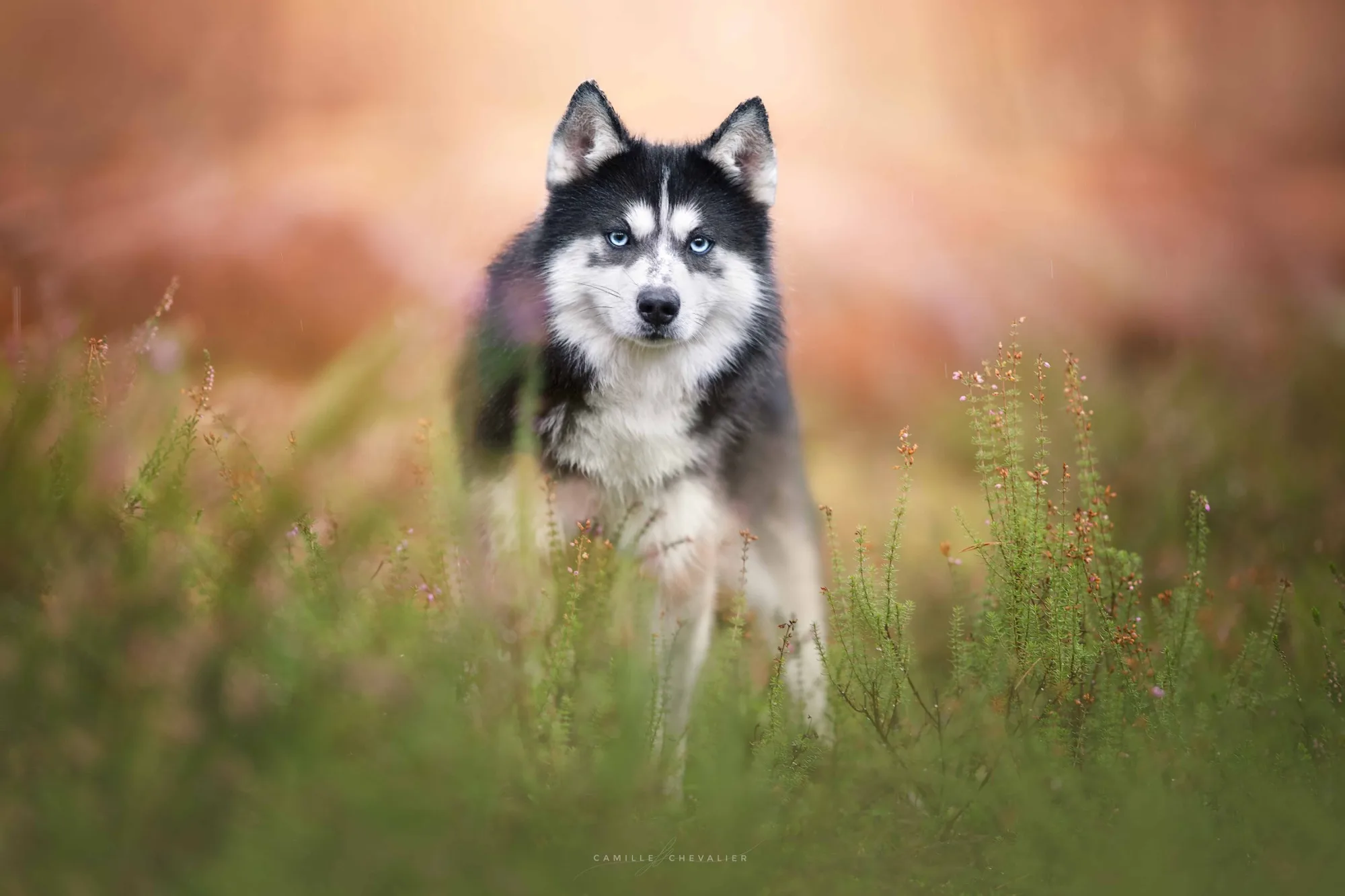
The Pomsky comes from a deliberate cross between a Husky and a Pomeranian. The aim was to obtain a dog with the Husky’s build but a gentler character. The Pomeranian is a cheerful, outgoing, affectionate little dog. The Husky is intelligent, independent and affectionate, with a great need to burn off energy and to discover the world.
Crossing these two breeds produces a small dog that is cheerful, outgoing and close to its family, with great intelligence and a need for exercise. To my mind, the Pomsky is easier to train and more adaptable than the Husky. In most cases the Pomsky does not have the Husky’s strongly primitive, escape-prone side.
So the Pomsky can be entirely suited to family life, provided you are ready to invest in its training, you have time to devote to it, and you want to share plenty of activities with it. We have in fact written an article about the activities you can do with your Pomsky: Activities for your Pomsky We recommend a minimum of an hour and a half of activity a day with your Pomsky; the activities can be varied, and the choice is yours.
The Pomsky’s temperament with children
This is a question that comes up very regularly: can the Pomsky live with children? The answer is yes. Our kennel, Le Royaume des Galopins, very regularly places Pomskies with children and it works wonderfully. So far we have had no negative feedback at all about a relationship between a child and a Pomsky.
The Pomsky has a sociable temperament, meaning it will spontaneously tend to approach others and seek contact with them. Whether adults, children or other animals, the Pomsky will go towards them quite naturally and seek their company. So we can say that the Pomsky is a rather extroverted, outgoing dog.
The Pomsky is also fairly gentle in its approach; it will tend to come to children softly rather than abruptly, which children greatly appreciate.
The Pomsky, in our kennel at least, shows no aggression whatsoever. We have never had a case of growling or biting. On the contrary, it is a balanced dog and shows a stable character, far removed from any fear or aggression.
The mini Husky and children
This little dog is also playful and lively, which children will love. It will always be up for following them into the garden, going for a bike ride, doing agility, or swimming. The Pomsky enjoys every kind of activity and is always eager to discover new places. Activities will of course need to be adapted to your Pomsky puppy’s age and size.
The Pomsky also enjoys learning new tricks. Despite its sometimes stubborn streak, the Pomsky will always be up for a few obedience exercises. Its intelligence lets it memorise new commands quickly. This shared moment of training and companionship should greatly appeal to your Pomsky, and to your children too.
Our Pomskies adapt perfectly to your one-year-old boy. They are close to him without pestering him or being rough. The relationship is wonderful. They have built a bond with him full of closeness and gentleness.
Precautions to take when adopting a Pomsky puppy
It is of course important to choose your future puppy and your kennel carefully. The puppy’s socialisation and the breeder’s selection are essential to your puppy’s relationship with your children.
For a balanced Pomsky that suits your children, here are a few key points to check:
Is the kennel registered and does it hold a breeding SIREN number?
This is a very important point to check. It is illegal for a private, non-professional individual to sell a Pomsky. The Pomsky is a non-LOF cross and its breeding is strictly regulated, in order to prevent trafficking, inbreeding, the spread of genetic diseases and fraud.
Being a breeder is a profession that includes socialisation as well as compliance with health and regulatory rules. Going through a professional means having legal guarantees and protections in the event of a dispute.
Have your puppy’s parents been Embark tested?
The Embark DNA test checks the parents’ DNA to confirm their Pomsky ancestry, exclusively Husky and Pomeranian. The Embark test screens for more than 230 genetic diseases, helping breeders prevent genetic problems. The parents’ Embark tests must be shown and/or provided to you at the time of booking. Never commit without an Embark test: it is your only way of being sure your Pomsky is a genuine Pomsky and not a cross of several breeds.
Are your future puppy’s parents present at the kennel?
More and more breeders use guardian-home contracts, meaning that your future puppy’s parents live all year with families and come back to the kennel to breed. This practice is, first of all, entirely prohibited under the Order of 3 April 2014, which states: “A breeder may only market the offspring of their own breeding. They are the keeper of the breeding females and of the litters they raise in their breeding establishment, which are identified in their name or in the kennel’s business name.” It is important for a number of reasons to be sure the parents are present at the kennel: for health reasons, for reasons of temperament and, as noted above, for legal reasons and so that families are not misled.
See and spend time with your future puppy’s parents
This is also an important point, for several reasons. The parents’ build will tell you a great deal about your puppy’s future build. If you do not like the parents, go no further. The parents’ general condition, and the care the breeder gives their breeding dogs, also says a great deal about the care they give their puppies. Finally, it is important to see the parents’ character, which will influence the puppy’s. So always favour an adult dog you like physically and who, in terms of character, is outgoing and comfortable in its own paws.
Spend time with and get to know your future breeder
The last essential point is to spend time with your future Pomsky’s breeder. You should feel confident and enjoy the time you spend there. Your breeder should support you before but also after the purchase of your future puppy. They should guide you and give you the information you need to welcome your Pomsky properly. They must of course sell you a puppy that is vaccinated, identified and wormed, with a certificate of good health and an invoice.
If you choose a kennel that respects the points described below, then you will find a Pomsky with a stable temperament; the puppy will be outgoing, cheerful and kind, and will get on wonderfully with your children.
Teaching children how to interact with a Pomsky puppy
It is also important to teach children how to interact with their puppy. The Pomsky is a kind, outgoing dog, but there are rules to respect in order to build a good relationship of trust.
One of the first rules to respect is not to disturb a dog that is sleeping or eating. Rest is essential to a puppy’s balance, so it is important to respect their rhythm and not to wake a sleeping dog. That is one of the golden rules to pass on to your child: the dog is a being in their own right, and their primary needs, such as sleep, must be respected. You do not disturb a dog that is eating; that is their private moment, and interrupting would be unwelcome. So let the puppy eat in peace.
Nor should a child pull the dog’s ears or tail. Although such gestures are funny and fairly natural for a child, they are most unwelcome and could hurt or startle the puppy. So it is important to teach your child that the dog’s body belongs to the dog, and that under no circumstances should the puppy have its fur, its ears or its tail pulled.
Letting a dog leave when it wants to is another important rule to respect. Children tend to want to pick the puppy up and have it beside them. But it is important to respect the puppy’s wishes, and it is not always willing. There is in any case no particular benefit in allowing a young child to carry a puppy. On the contrary, you need to be careful, because the risk of a fall is real and could be fatal depending on the puppy’s age.
Respect the puppy’s comfort zone and quiet space
It is worth explaining to your child that the puppy has a space of its own, such as its bed or crate, and that when it is in that space, the puppy must not be disturbed. So you do not go and cuddle it or pick it up when it is there; you wait for it to come out before approaching it.
All these rules are intended to strengthen the bond of trust the puppy will have with its small human. Most bites happen to minors. So it remains important to explain to children the rules to respect towards their own dog, but also towards dogs they do not know and encounter in the street, for instance.
It can also be very worthwhile to study canine calming signals as a family. Calming signals indicate a dog’s discomfort or its need to reassure and settle itself.
Conclusion: a good relationship between the Pomsky and children
The Pomsky is therefore a very good choice if you are looking for a sociable, outgoing family dog. It remains a lively dog that will need to burn off energy and that will love discovering new things. Your children will be delighted to share plenty of activities with it, and the odds are your children will tire before your Pomsky does.
The Pomsky remains a fairly easy dog to train; although stubborn, its considerable intelligence lets it grasp the various rules very quickly. That eagerness to learn is a boon for your child, who will be able to work on obedience with the dog and share some good moments together.
Although the Pomsky is an affectionate dog and far from aggressive, it is important to put rules in place from the moment it arrives, rules your child will need to respect for a calm, healthy relationship.