
The kennel journal
Training Your Toy Shepherd Puppy: The First Essential Steps
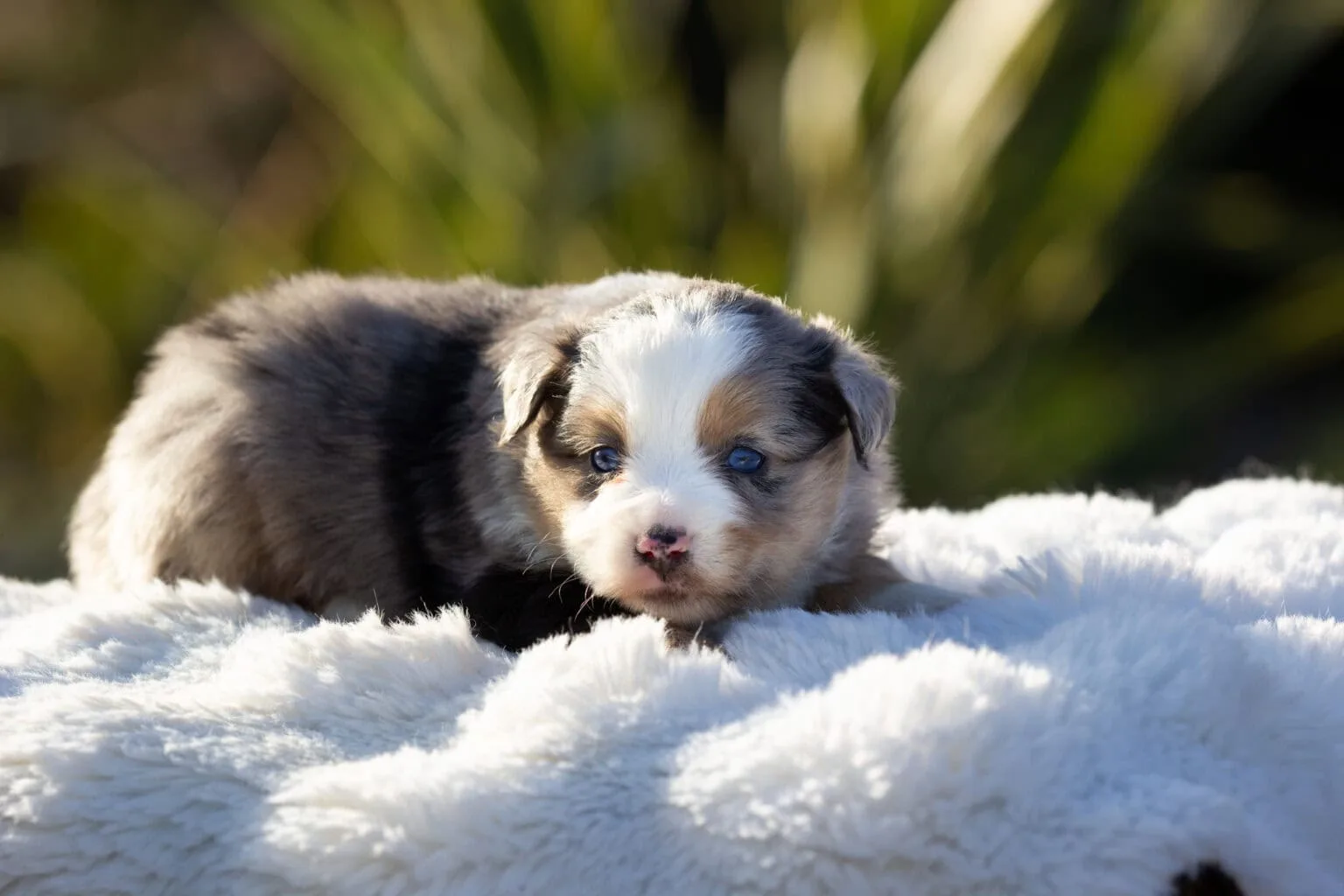
Have you just adopted a Toy Shepherd puppy? Here is what you need to know to start their training well:
- Start from 7–8 weeks
- Be consistent and patient
- Establish a reassuring routine
- Reward good behaviour
- Socialise your puppy
The key points to remember:
| Aspect | Recommendation |
|---|---|
| Meals | 3–4 times a day |
| Toilet trips | Every 1–2h at first |
| Training | 2–3 sessions of 5–10 min a day |
| Exercise | 1–2h a day |
| House-training | 4–8 weeks on average |
With consistency and love, your Toy Shepherd will soon become a wonderful companion.
Related video from YouTube
Preparing for your puppy’s arrival
About to welcome a Toy Shepherd? Excellent. Here is how to prepare for their arrival:
Making your home safe
Make your space safe for your ball of fluff:
- Hide the bins
- Protect electrical cables
- Put bags and medicines out of reach
- Remove toxic plants
- Create a safe space (crate or pen)
- Lock away household products
- Restrict access to certain areas
Essential equipment
Here is what you will need:
| For | What you need |
|---|---|
| Eating | Quality kibble, stainless steel or ceramic bowls |
| Sleeping | Crate (56x61x81 cm), mat, soft toy with a heartbeat |
| Training | Lead, collar/harness, treats, safe toys |
| Grooming | Brush, nail clippers, mild shampoo, puppy pads |
| Health | Supplements, first-aid kit |
Remember: your puppy is a baby until 24 weeks. Protect them from extreme temperatures and make sure they have shade and fresh water outdoors.
Tip: plan their arrival for a weekend. On the first night they may cry. Make their crate cosy and put on some soft music to reassure them.
- A daily plan for your puppy
A regular timetable is essential for your Toy Shepherd. Here is why and how to set one up:
2.1 Creating a routine
A routine brings:
- Stability for your puppy
- Help with house-training
- A stronger bond between you
An example for an eight-week-old puppy:
| Time | Activity |
|---|---|
| 7:00 | Wake up, toilet |
| 7:15 | Breakfast |
| 7:30 | Toilet |
| 8:00 | Play (15 min) |
| 10:00 | Toilet |
| 12:00 | Lunch, toilet |
| 14:00 | Nap (2h) |
| 16:00 | Toilet, play |
| 18:00 | Dinner, toilet |
| 20:00 | Bedtime |
| 22:00 | Last toilet trip |
To remember:
- Toilet every 1–2h
- 3–4 meals a day until 6 months
- Short games (5–15 min)
- 18–20h of sleep a day
“Your Toy Shepherd is a sponge. They absorb everything and are looking for their place in their new family.” – Anne Calmes, breeder
Adapt this programme to your own life, but keep a structure. Regularity helps your puppy feel safe and learn quickly.
- Socialise your Toy Shepherd
Socialisation is crucial for your Toy Shepherd puppy. Here is how to do it well:
3.1 New sounds and places
Start early, at around 6–8 weeks. Expose your puppy to different people, sounds and places. Use treats to create positive associations.
“Behavioural problems, not disease, are the leading cause of death in dogs under three.” – American Veterinary Society of Animal Behavior
| Experiences | Examples |
|---|---|
| Sounds | Vacuum cleaner, doorbell, thunderstorm |
| People | Children, older people, wheelchair users |
| Places | Park, busy street, café |
| Animals | Vaccinated dogs, cats |
Advice:
- Start with short sessions
- Watch your puppy’s body language
- Increase the intensity gradually
Activities:
- Walks around the neighbourhood
- Visits to friends
- Puppy classes (after vaccinations)
Never stop socialising your Toy Shepherd. It is an ongoing process for keeping a sociable dog.
- Teaching the basic commands
Your Toy Shepherd puppy should learn the basic commands from the moment they arrive at 8 weeks. It is crucial.
4.1 Fundamental commands to teach
Focus on these four commands:
| Command | Why it matters |
|---|---|
| Sit | The basis of everything |
| Stay | Safety and control |
| Come | Essential recall |
| Down | Calm and self-control |
To teach “sit”:
- Treat near the nose
- Raise it above their head
- When they sit: click or “Yes!” + reward
Do this several times a day, five minutes maximum.
4.2 Treats and praise
Rewards are the key:
- Small puppy treats
- Match the reward to the difficulty
- Maximum 10% of daily calories from treats
“Start training early. It sets your puppy up for later.” – Eukanuba
For success:
- A quiet place for training
- Add distractions little by little
- Stay positive and enthusiastic
- Always finish on a success
Remember: patience and consistency are your best assets in training your Toy Shepherd.
- House-training
House-training your Toy Shepherd? It is crucial. And it takes patience.
5.1 Choosing a spot
Find a corner outside for your puppy’s needs. That will help them make the connection.
A few tips:
- Take them out every 1–2 hours (especially before 8 weeks)
- Use a word such as “wee”
- Reward them straight afterwards
“A rewarded behaviour will be repeated. It becomes a habit.” – Preventive Vet
A typical schedule for an eight-week-old puppy:
| When | What to do |
|---|---|
| On waking | Outside |
| After meals | Outside (10–15 min) |
| After play | Quick trip outside |
| Before bed | Last trip outside |
Accidents? Normal. Do not punish them. Clean up and carry on with the training.
It generally takes 4 to 8 weeks. But every puppy is different. Be patient, your Toy Shepherd will get there.
- Crate training
The crate is your Toy Shepherd’s cosy little nest. But how do you get them to love it?
Why a crate? It offers:
- A safe refuge
- A boost for house-training
- Protection against mischief
- Comfort when travelling
Here are the basics:
- The right size
Choose a crate suited to your adult Toy Shepherd, with a divider for the puppy stage.
- A cosy nest
Add a soft bed, a blanket and toys. An item carrying your scent is the finishing touch.
- Gently but surely
Leave the crate open. Your puppy should explore it at their own pace.
- Pleasant moments
Associate the crate with treats and meals. Your puppy will love it.
| Puppy’s age | Maximum time in the crate |
|---|---|
| 8–10 weeks | 30–60 min |
| 11–14 weeks | 1–3h |
| 15–16 weeks | 3–4h |
| 17+ weeks | 4–5h |
Tip: a good session of exercise before the crate, and your puppy will settle more easily.
“Crating your dog can seem strange. But it is often harder for us than for them.” – Nikki, dog trainer
Do not forget: the crate is NEVER a punishment. It is your Toy Shepherd’s little paradise.
With a little patience, your puppy will soon adore their crate. Promise.
sbb-itb-f1d4565
- Walking on the lead
Teaching your Toy Shepherd to walk on a lead is crucial. Here is how:
7.1 Getting used to the collar and lead
- Equipment
Choose an adjustable nylon collar and a short training lead.
- Familiarisation
Let your puppy explore the collar and lead. Associate them with positive moments.
- Fit
Measure your puppy’s neck. Leave two fingers’ width under the collar.
“A harness and lead offer better control, especially for Australian Shepherds, which pull.” – Dr Brian Collins, vet
7.2 Learning to walk calmly
- Start indoors
Practise in a quiet place. Use treats to keep your puppy close to you.
- The “tree” method
Stop when the lead goes tight. Set off again when it slackens.
- Reward
Give treats and encouragement for good behaviour.
- Prepare your puppy
Tire them out before training. Practise off lead first.
- Short sessions
Start with 5–10 minutes. Increase gradually.
| Puppy’s age | Length of walk |
|---|---|
| 8–12 weeks | 5–10 minutes |
| 3–4 months | 15–20 minutes |
| 4–6 months | 20–30 minutes |
Patience and consistency are your allies. Soon your Toy Shepherd will be a walking pro.
- Grooming and handling
Grooming is crucial for your Toy Shepherd. Here is how to do it well:
8.1 Getting used to being touched
Start early. Familiarise your puppy with grooming from the moment they arrive. It will make future care and vet visits easier.
Keep sessions short and positive. Start with five minutes. Use treats.
Gently touch their paws, ears and mouth. That will help with vet examinations.
Introduce brushes and nail clippers gradually. Let them sniff first.
Brush once or twice a week. More during moulting.
| When | What to do |
|---|---|
| 1–2 times a week | Brush |
| Every 2–3 months | Bath |
| Once a month | Check nails |
| Once a week | Check ears |
To brush, dampen the coat lightly. Brush in the direction of the coat, from the shoulders backwards.
Bath every 2–3 months. No more often, as it can cause irritation.
“Expose your puppy to other healthy, vaccinated dogs.” – Dr Peggy Timm, Australian Shepherd owner
Consider the AKC S.T.A.R. Puppy programme. They will learn good manners and socialise.
These steps will help your Toy Shepherd enjoy grooming. It will strengthen your bond and make long-term care easier.
- Managing Toy Shepherd puppy challenges
Toy Shepherd puppies can be little devils. Here is how to tame their most irritating behaviours:
9.1 Too much barking? Do not panic
Barking is normal. But when it becomes an endless symphony, here is how to put a stop to it:
- Find the reason (boredom? anxiety?)
- Ignore attention-seeking barking, reward calm
- Teach them “quiet” with treats
- Give them toys to keep them occupied
“Understanding why your dog barks is the key to solving the problem.” – Doggy Dan, dog expert
9.2 Afraid of being alone? Take it slowly
Does your puppy panic when you leave? Here is how to help them:
- Get them used to being alone little by little
- Leave and come back without making a fuss
- Leave a t-shirt that smells of you
- Give them toys to distract themselves
| Time alone | What to do |
|---|---|
| 5–10 min | Start here |
| 30 min | Increase gradually |
| 1–2h | Aim for this with a 3–4 month puppy |
9.3 Chewing everything? Channel it
Chewing is natural. But not your shoes. Here is how to manage it:
- Give them suitable chew toys
- Say “No!” and replace with a toy
- Put dangerous objects away
- Use gates to restrict access
“Address the cause of the chewing, not just the symptoms.” – Dr Peggy Timm, behavioural vet
With these tips, your Toy Shepherd will become a model of good behaviour.
- Exercise and puzzle games
Toy Shepherds need to move AND to think. Here is how to keep them in shape:
10.1 Exercise for the little ones
These dogs are always on the go. They need at least 60 minutes of intense exercise a day. But be careful with the joints of puppies under six months.
What can you do?
- Daily walks at a relaxed pace
- Ball-throwing games
- Games in a secure garden
Here is a plan of attack:
| Activity | Duration | Why it is great |
|---|---|---|
| Walking | 2 x 30 min a day | Burns energy, new discoveries |
| Play | 2 x 15 min a day | Moves and thinks |
| Agility | 10–15 min a day | Terrific coordination |
10.2 Toys for clever minds
These bright little dogs love mental challenges. A few ideas:
- Food puzzles: hide treats in a complicated toy.
- The cups game: hide a treat under a cup and shuffle them.
- Treasure hunt: hide toys or treats around the house.
An easy game to make yourself:
“Take some old towels. Put treats inside. Fold them several times, adding treats at each fold.” – Peak City Puppy
Aim for 30 minutes of games a day, in two 15-minute sessions.
A Toy Shepherd that moves AND thinks = a happy, well-behaved dog.
- Nutrition and health
Your Toy Shepherd’s health depends on good nutrition and regular veterinary care. Here is how to achieve that:
11.1 Feeding your puppy
Your Toy Shepherd needs a diet suited to their size and their activity:
- 20 g of food per kilo of body weight per day
- 3–4 meals a day until 12 months
- Quality kibble with meat as the main ingredient
| Age | Meals a day | Quantity |
|---|---|---|
| 2–4 months | 4 | 20–25 g/kg |
| 4–6 months | 3 | 20 g/kg |
| 6–12 months | 2–3 | 20 g/kg |
| Adult | 2 | 1–1.5 cups a day |
Adjust according to your puppy’s activity and growth.
11.2 Veterinary visits
Essential to your puppy’s health:
- First visit: as soon as you adopt
- Vaccinations: every 3–4 weeks until 16–20 weeks
- Examinations: monthly until 4 months, then annually
The vet will check their weight, give vaccinations, examine eyes, ears and teeth, and discuss nutrition and preventive care.
“Dogs often hide their pain. Early diagnosis can prevent suffering.” – Dr Jerry Klein, AKC Chief Veterinary Officer
Think of treats to create a positive association with the vet’s surgery.
- Conclusion
Raising a Toy Shepherd is hard work. But do not panic, here is what to remember:
Start early. Your ball of fluff is ready to learn from 7–8 weeks.
Consistency is the key. Same commands, same rewards. Otherwise confusion is guaranteed.
A routine is reassuring. Your puppy will feel safe with a regular timetable.
| What | How much |
|---|---|
| Meals | 3–4 times a day |
| Toilet | Every hour (at first) |
| Training | 2–3 times a day, 5–10 min |
| Exercise | 1–2 hours a day |
Patience and perseverance. It takes time, especially for house-training.
Reward good behaviour. Treats and cuddles work.
Socialise your puppy. Introduce them to plenty of people, animals and places.
Remember: every puppy is unique. Adapt this advice to their personality. With love and consistency, your Toy Shepherd will become a wonderful companion.
FAQs
Are mini Australian Shepherds difficult to house-train?
No. These dogs are intelligent and learn quickly. But your involvement is crucial.
A few tips:
- Start at 8 weeks
- Be patient (4–8 weeks generally)
- Frequent trips outside (every 2h at first)
“Mini Aussies are easy to train. They learn fast. But you have to do your part.” – December 2022
How long do Australian Shepherds take to learn house-training?
By around six months, most have made great progress. But every dog is different.
Key stages:
| Age | Progress |
|---|---|
| 8 weeks | Beginning |
| 4 months | Improvement |
| 6 months | Well advanced |
“At six months they should be well advanced in house-training, comfortable in a crate, and know the basic commands.” – Dr Kimm, vet
Do not forget: consistency and patience are your allies. With regular training, your Australian Shepherd will soon be house-trained.
Related posts
Mistakes to avoid when adopting a Pomsky Miniature American Shepherd temperament: 10 facts Mini Aussie energy levels: complete guide Pomsky or Husky? The key differences between these magnificent breeds