
The kennel journal
The Toy Australian Shepherd: Everything About This Mini Dog With a Big Heart
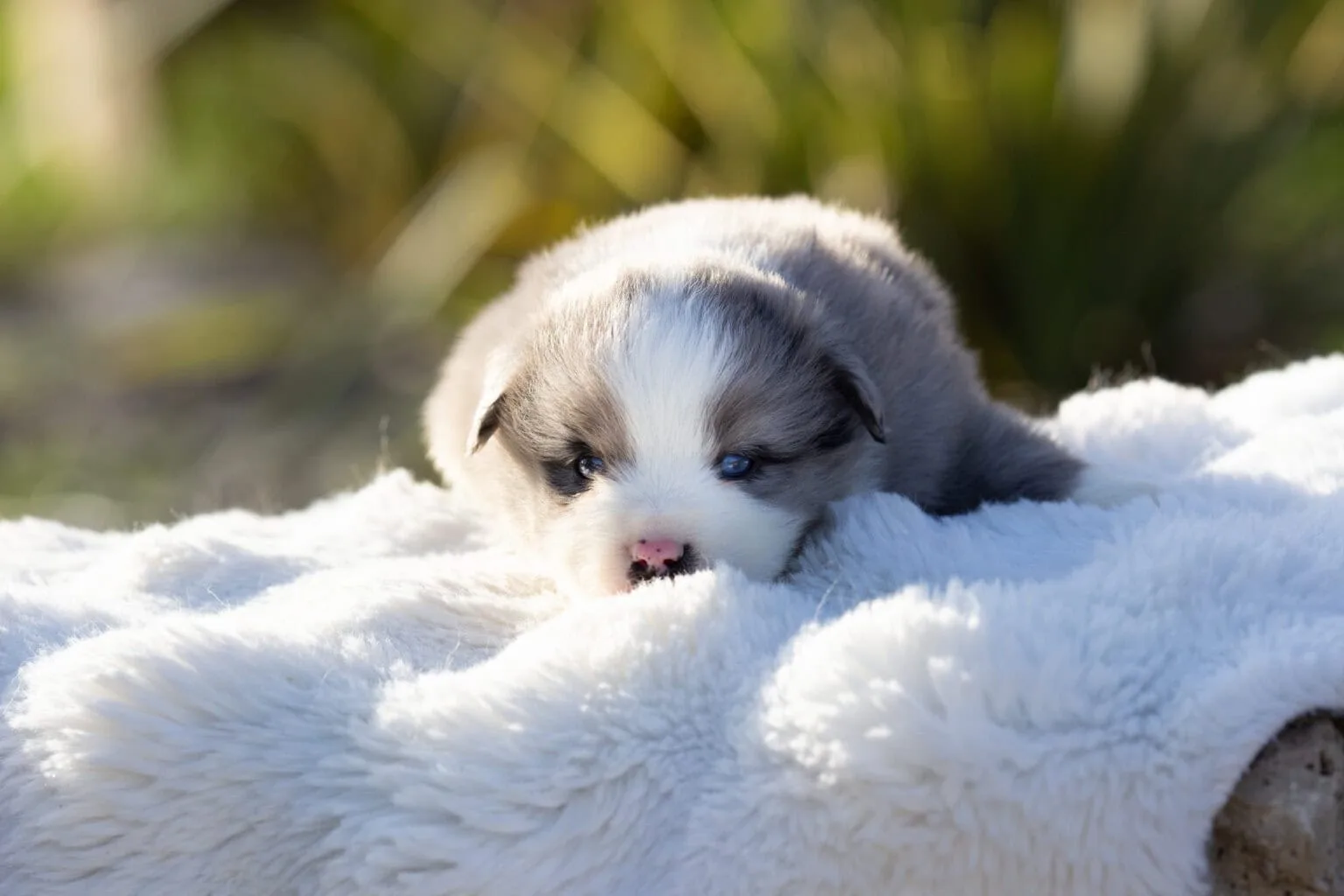
Are you looking for an intelligent, energetic, affectionate dog in a small format? The Toy Australian Shepherd could be for you. Here is the essential information:
- Height: 25–35 cm at the withers
- Weight: 5–8 kg
- Life expectancy: 12–13 years
- Personality: lively, playful, affectionate, but demanding of attention
Be warned: this is not a passive indoor dog.
| For | Against |
|---|---|
| Small size | Very energetic |
| Intelligent and easy to train | Needs plenty of exercise |
| Affectionate with its family | Can be anxious alone |
| Suited to apartments (with exercise) | Health to watch closely |
What it takes:
- 2 hours of physical activity a day
- 45 minutes of daily mental stimulation
- Early socialisation
- Positive, consistent training
The Toy Australian Shepherd: energy and love in concentrated form, demanding time and commitment. Not for everyone, but a real gem for the right owners.
This article covers the breed in detail. For our own dogs, our litters and the puppies available, the reference page is The Toy Australian Shepherd; and if you are still weighing it against its cousin, see the Miniature American Shepherd.
History and origins
The Toy Australian Shepherd is a mini version of the classic Australian Shepherd. Its history is tied to that of its larger cousins, but with a few interesting twists.
The birth of a new type
The Toy Australian Shepherd was born in the United States in the 1960s. Here is what to remember:
- Created from small Australian Shepherds
- The aim: to make a companion dog retaining the Australian Shepherd spirit
- About 10 years to reach “toy” size
Doris Cordova, a rider from California, played a key role. In 1968 she launched a breeding programme to create mini Australian Shepherds. Her star dog? Cordova’s Spike.
A status that provokes debate
The Toy Australian Shepherd divides the canine world:
| Key point | Detail |
|---|---|
| AKC | No official recognition |
| Debate | Controversy over miniature versions |
| Comparison | Like the Mini Border Collie (unrecognised) |
There are three sizes of Australian Shepherd:
-
Toy: 25–35 cm, 3–9 kg
-
Miniature: 33–45 cm, 9–18 kg
-
Standard: 45–58 cm, 18–29 kg
The Toy Australian Shepherd is not yet official, but it is gaining ground. Fans love its intelligence and its loyalty in a smaller format.
- The Toy Australian Shepherd’s appearance
The Toy Australian Shepherd is a mini version of its larger cousin. But make no mistake, it still has the breed’s characteristic look.
Height and weight
This little one measures between 25 and 35 cm and weighs from 3 to 9 kg. At birth? A tiny 57 grams.
Colours and patterns
Its coat is a genuine festival of colour:
- Blue merle: the most common, with silver, grey and white patches
- Red merle: golden red with dark brown and white
- Black: rare and elegant
- Red: the rarest colour
- Bi- or tricolour: black or red with white (and tan for the tricolour)
Key physical traits
- Coat: medium-length double coat, straight or wavy
- Ears: triangular with rounded tips
- Eyes: expressive, often amber or blue
- Front legs: slightly bowed
Watch out for scams. Some people try to pass standard Australian Shepherds off as Toys. Always check the paperwork and meet the puppy in person.
- Personality and behaviour
The Toy Australian Shepherd? A small dog with a BIG character. Here is what you need to know:
Typical behaviours
This little one is:
- As clever as they come
- A real live wire
- An inveterate player
- Clingy (in the good sense)
- A little wary of strangers
Be warned: without stimulation, it can become a real nuisance (barking, destruction).
Relationships with others
| Who? | How? |
|---|---|
| Family | Devoted companion |
| Children | A friend, but watch the “gathering” |
| Other dogs | Fine if well socialised |
| Strangers | Wary at first |
Advice: socialise them early to stop them becoming a hermit.
“Toy Australian Shepherds are affectionate balls of energy. They love family life and make excellent companions.” – Dogster
To remember:
- Needs action, otherwise watch your shoes
- Not a fan of solitude
- May play the shepherd with children or small animals
For a happy Toy Australian Shepherd: walks, games and training. Every day, without exception.
- Health problems
The Toy Australian Shepherd is generally robust, but it has its weak points. Here is what you need to know:
Common health problems
These little dogs can suffer from:
| Problem | Description | Prevention |
|---|---|---|
| Anxiety | Excessive stress | Exercise and mental stimulation |
| Eye problems | Cataracts, Collie eye anomaly | Annual examinations |
| Dysplasia | Abnormal joints | Balanced diet, healthy weight |
| Skin issues | Allergies, infections | Regular grooming |
| Drug sensitivity | Serious reactions | MDR1 genetic test |
| Epilepsy | Seizures | Veterinary monitoring |
Note: 50% of Aussies carry the MDR1 gene. Genetic testing is crucial.
Life expectancy and care
A Toy Australian Shepherd lives 12–13 years on average. To optimise their health:
- Feed them well
Choose foods with real meat as the first ingredient. Avoid grain-free options.
- Get them moving
Two hours of activity a day, minimum.
- Regular check-ups
Annual assessments and up-to-date vaccinations.
- Watch their weight
Obesity can shorten their life by 2.5 years.
- Stimulate their brain
Puzzle games and training to prevent boredom.
“A Toy Aussie in good shape is a happy dog. Good nutrition, exercise and preventive care are the key.” – Dr Marie Dupont, vet
By following this advice, your little companion will have every chance of a long, healthy life.
- Daily care
Caring for a Toy Australian Shepherd takes time. Here is how to meet their needs:
Grooming
The Toy Australian Shepherd has a double coat that requires:
- Brushing 2–3 times a week
- A bath every 2–3 months
- Daily brushing during moults
“Monthly professional grooming keeps the coat healthy and at the right length.” – Dr Marie Dupont, vet
Exercise
Needs vary from dog to dog:
| Activity | Duration | Frequency |
|---|---|---|
| Brisk walk | 30–60 min | 1–2 times a day |
| Intense play | 15–20 min | 2–3 times a day |
| Mental training | 10–15 min | 1–2 times a day |
Tip: meet the puppy’s parents to gauge their future energy.
Nutrition
Good nutrition is essential:
- Protein-rich kibble (25%+) for active small dogs
- Portions according to age and activity: puppies, 3–4 small meals a day
- Adults: 2 meals a day, 12 hours apart
- Seniors: 2 meals a day, around 2% of body weight
| Age | Quantity per day |
|---|---|
| Adult | 1–1.5 cups |
| Senior | Slightly less |
Important: watch their weight and adjust. Consult a vet for a tailored plan.
sbb-itb-f1d4565
- Training and socialisation
Training and socialisation are crucial for your Toy Australian Shepherd. Here is how to go about it properly:
Effective training
Toy Australian Shepherds are clever. To train them:
- Start young (8–10 weeks)
- Focus on the positive (treats, games)
- Keep it short (15–20 min a day)
- Stay consistent
Tip: play hide and seek. It is fun and it stimulates their brain.
Socialisation: the key
Socialisation shapes your dog’s character. To remember:
- Crucial period: 3–14 weeks
- Expose them gently to plenty of things
- Reward them when they react well
| To discover | Examples |
|---|---|
| People | Children, older people |
| Animals | Cats, dogs |
| Places | Park, car, town |
| Noises | Vacuum cleaner, thunderstorm |
“Socialising your Australian Shepherd puppy is vital.” – Dr Marie Dupont, behavioural vet
Note: wait until the vaccination course is complete before introducing them to other animals.
To avoid problems:
- Channel their herding instinct
Offer agility or search games.
- Prevent separation anxiety
Get them used to being alone little by little.
- Let them play with other dogs
Arrange meetings with relaxed, vaccinated dogs.
A well-trained Toy Australian Shepherd will be a wonderful companion for the whole family.
- Perfect for families
The Toy Australian Shepherd is a terrific family dog. Here is what you need to know:
Family life
This little dog fits beautifully into an active family:
- It adores children (5/5 according to the AKC)
- It joins in everything: hikes, games and more
- It also loves cuddles after a busy day
“A gentle, confident Aussie puppy can be perfect with children.” – Native Pet
But be careful: always supervise child–dog interactions.
Adapting to your home
The Toy Australian Shepherd adapts almost anywhere:
| Home | Adaptation | Worth knowing |
|---|---|---|
| House | Excellent | A garden is the dream |
| Apartment | Fine | With enough exercise |
In an apartment? Here are the keys:
- Get moving
At least an hour of exercise a day, split into several sessions.
- Stimulate their brain
Games and training to prevent boredom.
- Routine, routine
Meals, walks, games: keep a regular rhythm.
If you work long hours, consider doggy daycare or a dog walker.
In short, the Toy Australian Shepherd can be a wonderful family companion. Give it exercise and attention and it will be happy almost anywhere.
- Choosing a Toy Australian Shepherd
Do you want a Toy Australian Shepherd? Excellent. But be careful, it is not a decision to take lightly. Here is how to choose your future companion well:
Finding a good breeder
A good breeder is the key to having a healthy puppy. Here is what to look for:
- Experience: at least 10 years with the breed
- Genetic testing on the parents
- Puppies raised in the house, not in cages
- Total transparency from the breeder
“A breeder who knows their puppies inside out is ideal for finding your perfect match.” – Blue Buckaroo Aussies
Advice on adoption
Before falling for one, think about:
-
Your pace of life: these little monsters need to move.
-
Your space: an apartment can be enough, but you have to take them out often.
-
The puppy’s character: watch them closely to find your canine soulmate.
| Energy | Ideal for |
|---|---|
| Low | Apartment, calm families |
| Medium | Active families, house |
| High | Sporty owners, wide open spaces |
-
Socialisation: choose a confident, comfortable puppy.
-
Health: insist on the paperwork and medical history.
“NEVER buy out of pity. It only encourages bad breeders.” – Blue Buckaroo Aussies
Take your time. A Toy Australian Shepherd means 13 years of happiness… and of responsibility.
- Life with a Toy Australian Shepherd
Daily tasks
Living with a Toy Australian Shepherd is hard work. Here is what it involves:
- Two walks of 30–45 minutes a day. No choice: these little monsters have energy to spare.
- For puppies, 3–4 meals a day. And fresh water around the clock, obviously.
- Daily brushing of the sensitive areas, and a thorough brush 1–2 times a week.
- Regular training. These dogs are clever, they need stimulating.
| Activity | Frequency | Duration |
|---|---|---|
| Walk | Twice a day | 30–45 min |
| Meals (puppy) | 3–4 times a day | – |
| Full brushing | 1–2 times a week | 15–20 min |
| Training | Daily | 10–15 min |
Preparing your home
Want to welcome a Toy Australian Shepherd? Here is how to prepare the ground:
- Make the space safe
Put away anything fragile or dangerous. Protect your electrical cables. And do use gates to restrict access to certain areas.
- A cosy corner
Set up a bed near yours. And provide chew toys, which help during teething.
- The basic kit
Bowls, harness or collar with an ID tag, lead, and interactive toys. That is the bare minimum.
- Outdoors
If you have a garden, fence it. And create a safe play space for outdoor activities.
Do not forget: these dogs are hooked on attention. Set aside time to play and socialise. A stable routine is the key to a happy dog that feels safe in its new home.
- Drawbacks and myths
Challenges to face
Having a Toy Australian Shepherd is great. But it is not always easy:
- Intense exercise needs
These little dogs are balls of energy. They need:
- 2 hours of exercise a day
- 45 minutes of mental stimulation
Otherwise? Watch out for damage and escapes.
- Missing you
These dogs adore their family. Sometimes too much:
- They hate being alone
- It can make them anxious and difficult
| Signs | Solutions |
|---|---|
| Barking | Daycare |
| Destruction | Walks |
| Accidents | Toys |
- Fragile health
Like many small dogs, they have their problems:
- Eyes (Collie eye anomaly, cataracts)
- Hips and elbows
- Epilepsy
Regular vet appointments are essential.
Commonly said, but…
Watch out for received ideas about Toy Australian Shepherds:
- “They are indoor dogs”
False. They need to move, not to stay on the sofa.
- “Too small to have hip problems”
Wrong. Dysplasia can affect them despite their size.
- “You can leave them alone for long periods”
No. They need company, otherwise watch out for anxiety.
- “Easy to train”
Not so fast. They are clever but stubborn. Patience required.
- “Perfect with children”
Careful: they can nip at ankles. Socialise them early.
In short, Toy Australian Shepherds are terrific, but they demand time and energy. Think it through carefully before adopting one.
Conclusion
The Toy Australian Shepherd? A dog that asks a great deal, but gives even more. Here is the essential:
- Hyperactive: 2h of exercise + 45 min of mental stimulation a day. Minimum.
- A brain on legs: loves dog sports and learning things.
- Clingy (in the good sense): loyal to the core, but watch for separation anxiety.
- Health to monitor: regular vet check-ups are the basis of everything.
| For | Against |
|---|---|
| Small size | Ball of energy |
| Affectionate | Stressed when alone |
| Easy to train | Persistent herding instinct |
| Lives a long time (12–15 years) | Not cheap to buy |
“Do you want a real friend, not a sofa vegetable? An Aussie is the best. Blu changed my life, no question.” – Dawn, Aussie fan
In short, think it through carefully before adopting. It is not for everyone. But if you are ready, you will love it.
FAQ
Is the Toy Australian Shepherd an official breed?
No. It is a miniature version of the Miniature Australian Shepherd, created through selective breeding.
How were Toy Australian Shepherds obtained?
Two main methods:
- Crosses between small Miniature Australian Shepherds
Selection over several generations.
- Crosses with other dwarf breeds
Mixing with small dogs.
What health problems can they have?
Like all dogs, they have their issues. Here are the most frequent:
| Problem | Details |
|---|---|
| Anxiety | Excessive stress |
| Eyes | Cataracts, glaucoma |
| Joints | Dysplasia |
| Medication | Increased sensitivity |
| Epilepsy | Seizures |
| Skin | Allergies, itching |
“Knowing your Aussie’s health risks is crucial, whether they are new to the family or not.” – Dr Richardson, vet
For their health:
- Regular check-ups
- Observe them closely
- Learn the warning signs
Related posts
Understanding puppy playgroup dynamics Training your Toy Shepherd puppy: the first essential steps Pomsky exercise: how much physical activity does your dog need?