
The kennel journal
Pomsky Exercise: How Much Physical Activity Does Your Dog Need?
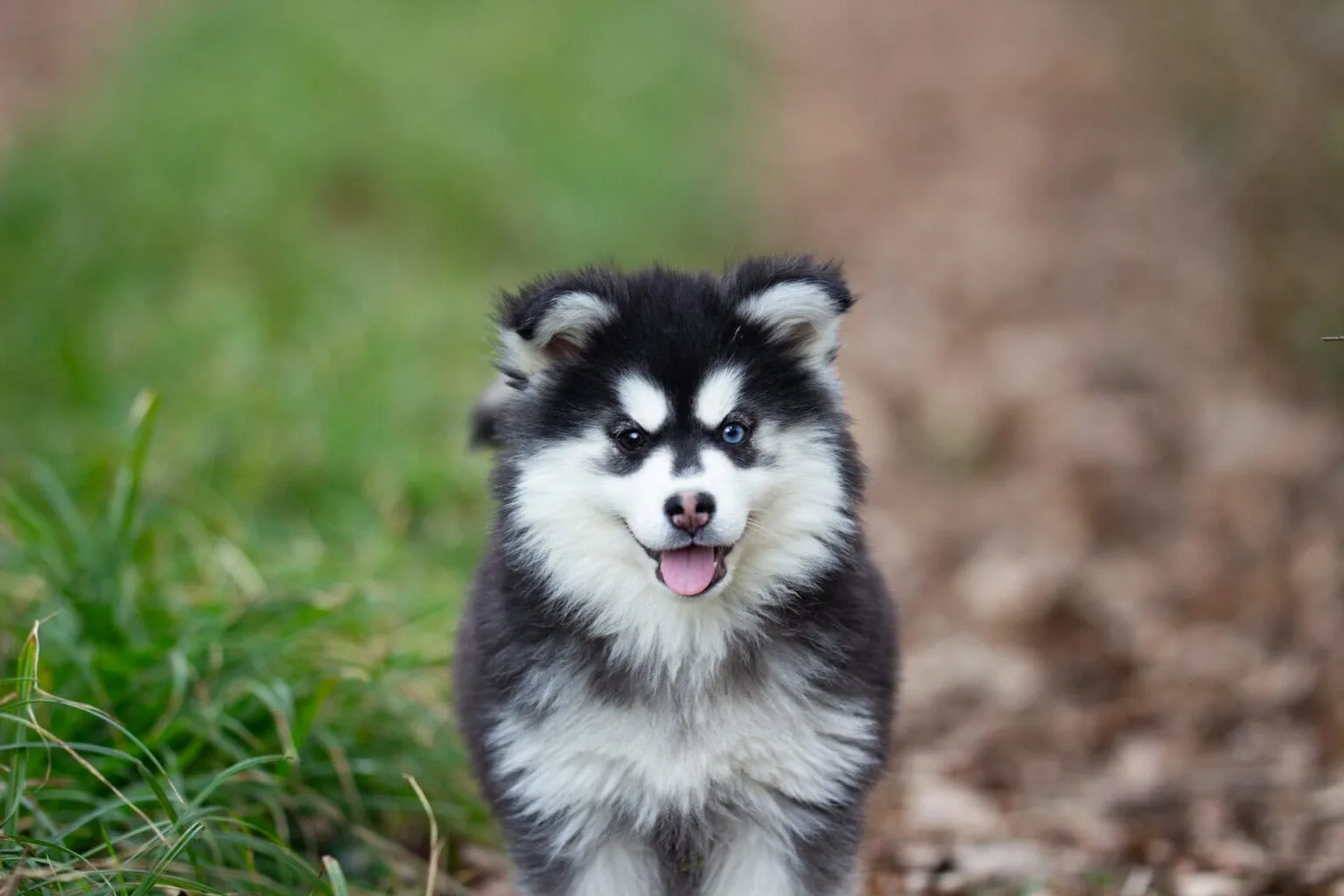
Your Pomsky needs about 60 minutes of exercise a day. Here is the essential information:
- Adults: 2 sessions of 30 minutes a day
- Puppies: 5 minutes per month of age, twice a day
- Vary the activities: walks, games, mental training
- Adjust according to your dog’s age and condition
- Watch for signs of tiredness
| Age | Daily exercise |
|---|---|
| 2 months | 20 min (2 x 10 min) |
| 4 months | 40 min (2 x 20 min) |
| 6 months | 60 min (2 x 30 min) |
| Adult | 60 min minimum |
An active Pomsky is a happy Pomsky. Watch your dog, adjust its activity, and do not forget safety: weather, water breaks, no overexertion.
Related video from YouTube
The basics of exercise for a Pomsky
A Pomsky’s exercise depends on two key factors:
Age and size
Needs vary according to life stage:
- Puppies: apply the five-minute rule. For every month of age, give five minutes of exercise, twice a day.
For example:
- 2 months: 2 x 10 minutes (20 minutes in total)
- 6 months: 2 x 30 minutes (60 minutes in total)
- Adults: aim for 60 minutes a day, ideally in two 30-minute sessions.
Personality
Every Pomsky is unique. F1B and F2B dogs (backcrossed with Huskies) can be more energetic.
“Pomskies are not as active as Huskies, but they are still active dogs.” – Bowtie Pomsky LLC
Tip: keep an eye on your Pomsky. If it becomes restless or destructive, it needs more exercise.
| Age | Recommended daily exercise |
|---|---|
| 2 months | 20 min (2 x 10 min) |
| 4 months | 40 min (2 x 20 min) |
| 6 months | 60 min (2 x 30 min) |
| Adult | 60 min minimum |
A good session in the morning can prevent damage while your Pomsky is alone.
Daily exercise for Pomskies
Pomskies need 60 minutes of exercise a day. Here is how to keep them fit:
Length of exercise
For adults, aim for two 30-minute sessions. Puppies? Follow the rule of five minutes per month of age, twice a day.
| Puppy’s age | Length of exercise (twice a day) | Daily total |
|---|---|---|
| 2 months | 10 minutes | 20 minutes |
| 3 months | 15 minutes | 30 minutes |
| 4 months | 20 minutes | 40 minutes |
| 5 months | 25 minutes | 50 minutes |
| 6 months | 30 minutes | 60 minutes |
Types of exercise
Mix these activities to stimulate your Pomsky:
- Walks
- Running
- Fetch games
- Hiking
- Swimming
Tip: a dog backpack can add interest to walks. Add a little weight for more intensity.
Frequency
The key? Consistency. Two sessions a day for adults, two to three short sessions for puppies.
Always adapt the exercise to your Pomsky’s age, health and energy. A tired dog is a happy dog.
Exercise by age
Your Pomsky’s exercise needs change over time. Here is how to adapt their activity:
Pomsky puppies: energy to spare, but fragile
Pomsky puppies are balls of energy, but watch their joints. Follow this simple rule:
| Age | Exercise per day |
|---|---|
| 2 months | 20 min (2×10) |
| 3 months | 30 min (2×15) |
| 4 months | 40 min (2×20) |
| 5 months | 50 min (2×25) |
| 6 months | 60 min (2×30) |
Focus on short games and walks on soft ground. Concrete? Not just yet.
Adult Pomskies: an hour a day to stay in shape
Your adult Pomsky needs about 60 minutes of daily exercise. Split that into two 30-minute sessions. On the menu:
- Walks
- Running
- Fetch games
- Hiking
- Swimming
Want to make training harder? A dog backpack will do the job.
Senior Pomskies: gentle but regular
At around seven, your Pomsky becomes a senior. Adapt their exercise:
- 30 minutes a day, in shorter sessions
- Favour walking or swimming
- Start any new activity gently
- Warm them up before exertion, especially if they have arthritis
“Even as a senior, your dog needs 30 minutes of exercise a day.”
Whatever their age, watch your Pomsky during exercise. Tired? Uncomfortable? Adjust the intensity or the duration. If in doubt, ask your vet for advice.
Indoor and outdoor activities
Your Pomsky needs to move, indoors as well as out. Here is how:
Indoor games
Do not fancy going out? No problem. Try these:
- Treat hide and seek: hide treats and let your dog find them. Good for their nose and their legs.
- Home-made obstacle course: use what you have. Boxes to crawl through, chairs to weave around. Be creative.
- Tug of war: a classic. Bonus: teach them “drop” and “take”.
- Stairs: throw a toy to the top. Your Pomsky gets cardio going up and down.
| Game | Benefits |
|---|---|
| Hide and seek | Stimulates the nose and movement |
| Obstacle course | Improves agility |
| Tug of war | Muscle and obedience |
| Stairs | Intense cardio |
Outings
When the weather is good, get outside. Here are some ideas:
- Brisk walk: 30 minutes a day. Split it in two if you need to.
- Frisbee: perfect for their hunting instinct.
- Swimming: if your dog likes water, it is excellent and gentle on the joints.
- Hiking: explore new places together.
- Agility: in your garden or at a dog club.
Always adapt to your Pomsky’s age and condition. And do not forget the water.
sbb-itb-f1d4565
Mental exercise
Your Pomsky’s brain needs stimulating as much as its body. Here is how:
Puzzle toys
These toys keep your Pomsky occupied and make them think:
- Puzzle Brick: inexpensive, safe, reduces boredom.
- Dog Casino: harder, with several steps to reach the treats.
| Toy | Strong points |
|---|---|
| Puzzle Brick | Affordable, safe |
| Dog Casino | Varied challenges, sturdy |
Start simple and increase the difficulty gradually.
Stimulating training
Training boosts your Pomsky’s mind and strengthens your bond:
- 3 sessions of 5 minutes a day
- Use their favourite treats
- New tricks: “roll over”, “spin”, “crawl”
“10 minutes of scent work = 50 minutes of exercise.” – Fiona Cowie, dog trainer
Try these scent games:
- Treat hiding
- Find the toy
- Snuffle mat
Every Pomsky is unique. Watch what they enjoy and adapt their mental activities.
Signs of enough exercise
How do you know whether your Pomsky is moving enough? Here are the clues:
Normal behaviour
A Pomsky getting enough exercise is generally:
- Calm at home
- Sleeping well at night
- Playing without going over the top
- Obeying simple commands
Conversely, if they are short of exercise, they may be:
- Restless
- Distracted
- Vocal
- Difficult on the lead
Signs of insufficient activity
| Sign | Description |
|---|---|
| Destruction | Chews everything, digs, scratches furniture |
| Weight | Puts on weight for no reason |
| Restlessness | Cannot settle |
| Clinginess | Follows you everywhere |
“A restless or anxious Pomsky? Check its exercise.” – Bowtie Pomsky LLC
What can you do?
- Lengthen the walks gradually
- Play with them more
- Use puzzle games
Every Pomsky is unique. Watch yours and adapt. If in doubt, talk to your vet.
Adapting your Pomsky’s exercise
Every Pomsky is unique. Here is how to adjust their activity:
Watch their energy
Look at how they behave:
- Calm at home? That is fine.
- Restless or destructive? They may be short of exercise.
A Pomsky in good shape sleeps well and plays normally.
Change their activity plan
Adapt according to age and energy:
| Age (months) | Activity | Duration (min) |
|---|---|---|
| 2–4 | Indoor games, short walks | 15 |
| 4–6 | Longer walks, training games | 30 |
| 6–12 | Hikes, fetch, advanced training | 45–60 |
Adults: aim for 60 minutes a day minimum.
Talk to a vet
A professional can help:
- To adapt exercise to your dog’s health
- If their behaviour changes
- For a tailored plan
Do not hesitate to ask, especially for puppies or older dogs.
Safety during exercise
Your Pomsky’s safety during exercise is crucial. Here is what you need to know:
Weather and exercise
The weather can affect your Pomsky:
- Heat: go out early in the morning or in the evening.
- Ground test: put your hand down for five seconds. Too hot for you means too hot for them.
- Cold: limit time outside. A coat can help.
Hydration
Water is vital:
- Always take water with you.
- A bottle with a built-in bowl is practical.
- Offer water every 15 to 20 minutes of activity.
| Length of exercise | Water breaks |
|---|---|
| 0–30 min | Once |
| 30–60 min | 2–3 times |
| 60+ min | Every 20–30 min |
Avoiding exhaustion
Overexertion is dangerous. How to avoid it:
- Spot tiredness: excessive panting, slowing down.
- Adapt the intensity: start gently, build up gradually.
- Vary the activities: mix games, walks and runs.
If your Pomsky seems exhausted, STOP. See a vet if it persists.
Conclusion
A Pomsky needs exercise. Here is what you need to know:
- 60 minutes a day for an adult, in two 30-minute sessions.
- Exercise prevents boredom and mischief.
- Vary the activities:
| Physical | Mental | Social |
|---|---|---|
| Walks | Puzzles | Dog park |
| Runs | Training | Dog-friendly beach |
- Adapt according to age: puppies, 5 minutes per month of age, twice a day
- Adults: 60 min a day
- Seniors: gentle exercise
Watch your dog and adjust. Think about safety: weather, water breaks, no overexertion.
An active Pomsky is a happy Pomsky. And a happy owner too.
FAQs
How do you tire out a Pomsky?
Pomskies need plenty of exercise. Here is how to tire them out:
- Long, varied walks
- Hikes for more intensity
- Running or cycling (with the dog alongside)
- Throwing games (ball, frisbee)
- Tug of war
- Home-made obstacle courses
The key? Vary the activities to stimulate their body AND their mind.
How do you exercise a Pomsky?
To exercise your Pomsky properly:
- Duration
Aim for 60 minutes a day, in two 30-minute sessions.
- Types of activity
| Physical | Mental | Social |
|---|---|---|
| Walks | Puzzles | Dog park |
| Runs | Training | Dog-friendly beach |
| Swimming | Puzzle games | Meeting other dogs |
- Frequency
Exercise your Pomsky EVERY day. It is essential to their health and wellbeing.
- Adaptation
Adjust the intensity according to your dog’s age and condition.
A tired Pomsky is a happy Pomsky. And a well-behaved one.
Related posts
Miniature American Shepherd temperament: 10 facts Mini Aussie energy levels: complete guide Training your Toy Shepherd puppy: the first essential steps