
The kennel journal
Mini Aussie Energy Levels: The Complete Guide
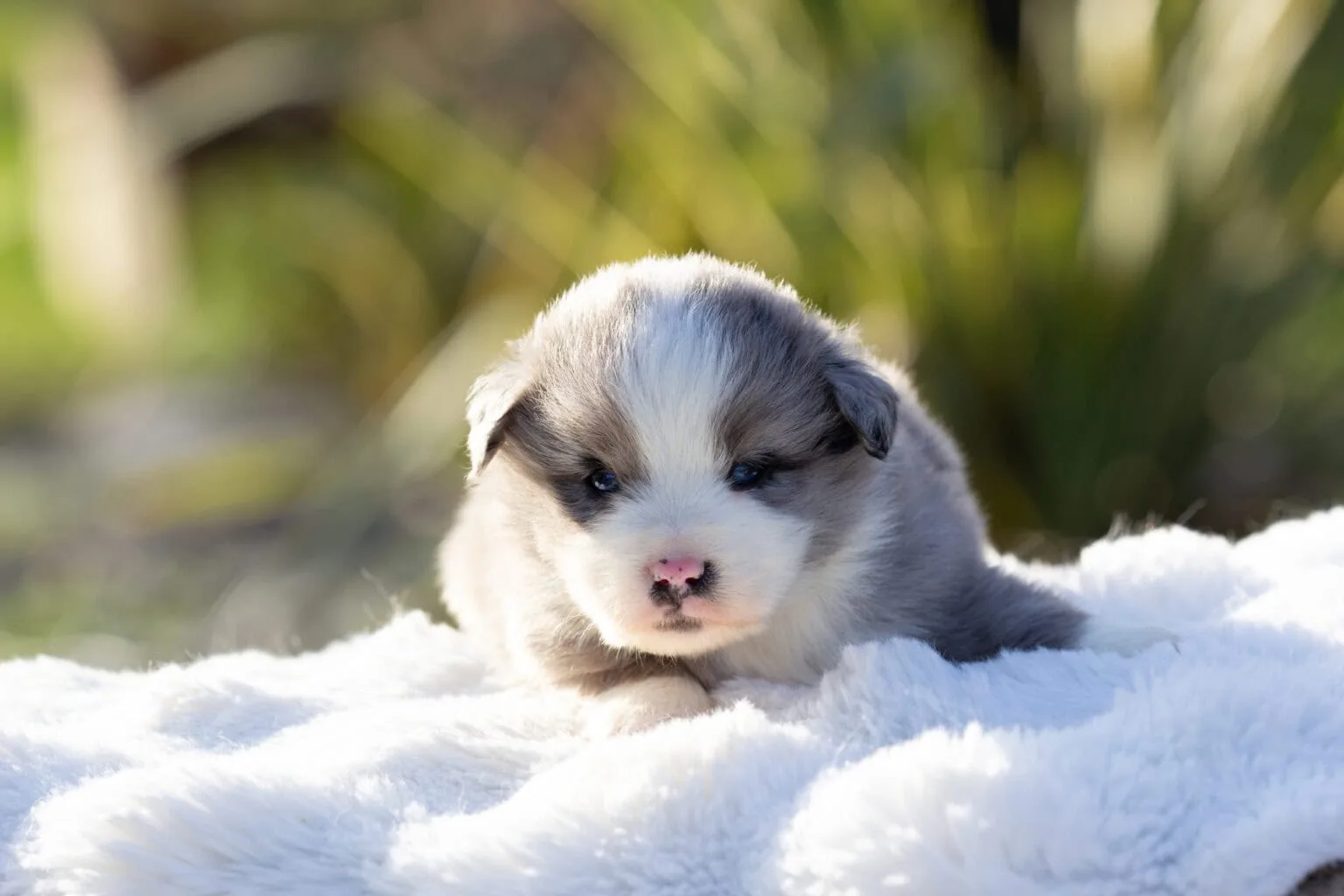
Mini Aussies are balls of energy that need:
- 1–2 hours of daily exercise
- Constant mental stimulation
- Varied activities
Key points:
• Very energetic despite their small size • Needs similar to standard Australian Shepherds • Adapt to different lifestyles if well exercised • Risk of destructive behaviour if under-stimulated
Quick comparison:
| Characteristic | Mini Aussie | Standard Australian Shepherd |
|---|---|---|
| Height | 33–45 cm | 46–58 cm |
| Weight | 9–18 kg | 18–29 kg |
| Exercise per day | 1–2 hours | 2+ hours |
For a thriving Mini Aussie, combine intense physical activity with daily mental stimulation. A tired dog is a happy dog.
Related video from YouTube
The basics of Mini Aussie energy
Mini Aussies? Real live wires on legs. But why so much energy?
Mini vs Standard: size is not everything
Do you think Mini Aussies are less active than Standards? Wrong.
| Characteristic | Mini Aussie | Standard Aussie |
|---|---|---|
| Height | 33–45 cm | 46–58 cm |
| Weight | 9–18 kg | 18–29 kg |
| Daily exercise | 1–2 hours | 2+ hours |
Minis have just as much energy, simply in a smaller format.
Where does that energy come from?
- Herding genes: it is in their DNA
- Age: young dogs are faster
- Personality: every dog is unique
- Environment: city or country life changes things
A bored Mini Aussie? Watch out for the damage.
For a happy Mini Aussie:
- Daily walks
- Games
- Mental stimulation
In short: get them moving, make them think. An active Mini Aussie is a thriving Mini Aussie.
Managing Mini Aussie energy
Mini Aussies are balls of energy. Here is how to keep them happy and fit.
Daily exercise
These dogs need at least 1–2 hours of activity a day. No compromise. Here is a typical plan:
- Two 30-minute walks
- 30 minutes of intense play
- 30 minutes of training
A breeder once told me: “A tired Mini Aussie is a happy Mini Aussie.” It is true.
Mental stimulation
Physical exercise is not enough. Their brain needs work too:
- Dog puzzles (15–20 min a day)
- Obedience (2–3 sessions of 10 min)
- Search games (15 min a day)
This prevents boredom and mischief.
Energy imbalance
| Too much energy | Not enough |
|---|---|
| Excessive barking | Lethargy |
| Destruction | Weight gain |
| Hyperactivity | Loss of interest in play |
| Lack of focus | Too much sleep |
Seeing these signs? Adjust the exercise and speak to your vet.
Every Mini Aussie is unique. Watch yours and adapt their activities. A well-exercised Mini Aussie is a balanced, cheerful companion.
Managing boundless energy
Mini Aussies are balls of energy on legs. Here is how to help them burn it off:
Daily exercise plan
These little monsters need 1 to 2 hours of activity a day. An example programme:
| Activity | Duration | Frequency |
|---|---|---|
| Brisk walk | 30 min | Twice a day |
| Frisbee | 20 min | Once a day |
| Running | 30 min | 3 times a week |
| Swimming | 30 min | Twice a week |
Mix the activities to avoid boredom.
Thinking games
The brain needs a workout too. A few ideas:
- Treat-dispensing toys
- Treasure hunts at home
- DIY obstacle courses
- New tricks (15 min a day)
This stops them going round in circles and getting bored.
Training to channel energy
Obedience is the key to managing an over-excited Mini Aussie:
- Start calmly
Train first in a quiet place, then increase the difficulty.
- Bring out the big rewards
For difficult exercises, go for premium treats: chicken, cheese.
- “Stay” is your friend
This command is CRUCIAL for settling your dog on request.
- Repeat, repeat, repeat
Do 2–3 sessions of 10 minutes a day to reinforce obedience.
By combining exercise, mental games and training, you will help your Mini Aussie channel their energy positively.
How energy changes with age
Mini Aussies are lively balls of fluff, but their energy changes over time. Here is how:
Puppies: miniature tornadoes
Mini Aussie babies? Real live wires.
- 5 minutes of exercise per month of age, every day
- Short but frequent games
- Plenty of naps between the madness
“Do not push puppies too hard. Their little bones are still fragile.” – Dr Martin, vet
Adults: energy at its peak
Between one and three years, it is bedlam:
- 1 to 2 hours of exercise a day
- A mix of physical and mental activities
- At around 2–3 years, they finally learn to settle
| Age | Exercise | Focus |
|---|---|---|
| 1–2 years | 2h a day | Short, easily distracted |
| 2–3 years | 1–2h a day | Better |
| 3+ years | 1–1.5h a day | Good |
Seniors: slowing gently
From eight years on, things calm down:
- Less energy, but still active
- Adapted exercise
- Adjusted diet
“Talk to your vet about adapting the exercise and switching to senior food. Your knees will thank you.” – Karen, trainer
By understanding these changes, you will be your Mini Aussie’s best friend, whatever their age.
Energy and lifestyle
Mini Aussies are balls of energy. They adapt to different lifestyles, but with conditions. Let us look at how their liveliness affects their wellbeing.
City, suburbs or country?
Where they live is crucial for these energetic little shepherds:
| Environment | Advantages | Challenges |
|---|---|---|
| City | Dog parks, stimulation | Limited space, noise |
| Suburbs | Gardens, quiet | Fewer activities |
| Country | Wide open spaces | Possible isolation |
In the city, Mini Aussies can thrive if their exercise needs are met. One owner says: “I live in a 90 m² flat. We do an hour’s walk a day and the dog park at weekends. He is delighted.”
Active versus sedentary owners
The dog’s energy has to match the owner’s:
- Active: a perfect match. Hikes, jogging, dog sports.
- Moderately active: fine with effort. Long daily walks required.
- Sedentary: a major challenge. Risk of behavioural problems.
A Mini Aussie needs at least an hour of intense exercise a day. Otherwise, watch out for the damage.
Challenges for less active owners
If you are not sporty, watch out for problems:
- Destructive behaviour
- Hyperactivity
- Separation anxiety
- Weight gain
The solution? A dog walker or daycare. One owner reports: “I work 10 hours a day. My Mini Aussie goes to daycare three times a week. It makes all the difference.”
A happy Mini Aussie is a tired Mini Aussie. Make sure you can meet their needs before adopting one.
sbb-itb-f1d4565
Energy and health
Mini Aussies need regular exercise. Here is why it matters and how to manage their energy.
Why exercise is crucial
Physical activity works wonders for Mini Aussies:
- Keeps their weight under control
- Strengthens their muscles and joints
- Stimulates them mentally
- Prevents digestive problems
An active Mini Aussie is a happy, healthy dog. It is as simple as that.
What happens without enough exercise?
Without sufficient activity, your Mini Aussie is at real risk:
| Problem | Consequences |
|---|---|
| Weight gain | Diabetes, joint problems |
| Boredom | Destruction, excessive barking |
| Anxiety | Hyperactivity, stress |
| Muscle loss | Stiffness, especially in seniors |
“40% of dogs seen by American vets are clinically overweight or obese.” – Veterinary statistic
Be careful not to overdo it
Too much exercise can also be harmful. A few tips:
- Increase the intensity gradually
- Spot the signs of tiredness (panting, slowing down)
- Adapt to age: no long runs for puppies before 12–15 months
- Fresh water and shade during outdoor activities
An adult Mini Aussie needs about 1–2 hours of exercise a day, spread across several sessions.
“Exercise is the most important thing you can do for your Australian Shepherd.” – Expert canine advice
Follow these principles and your Mini Aussie will stay in great shape all their life.
Mini Aussies vs other breeds
Mini Aussies are balls of energy. But how do they compare with other dogs? Let us take a look.
Canine energy levels
Dogs have varying energy levels:
| Energy | Traits | Breeds |
|---|---|---|
| Low | Calm, little exercise | Bulldogs, Chow Chows, Pugs |
| Medium | Active but balanced | Labradors, Golden Retrievers |
| High | Very active, always on the move | Border Collies, Jack Russell Terriers |
Where do Mini Aussies sit?
Mini Aussies? The “high energy” category, without hesitation. They need:
- 1–2 hours of exercise a day
- Constant mental stimulation
- Varied activities
And unlike other breeds that settle at around a year old, Mini Aussies keep their spark for a long time.
Energy cousins
Who resembles Mini Aussies in terms of energy?
- Standard Australian Shepherds
- Border Collies
- Working Australian Shepherds
These dogs love dog sports and need to burn off energy physically and mentally.
One Mini Aussie owner reports:
“My girl alternates between phases of intense activity and naps. She is not on the starting blocks around the clock like some herding dogs.”
Every Mini Aussie has their own rhythm. It is up to you to find the right balance.
The best activities for Mini Aussies
Mini Aussies are balls of energy. Here is how to keep them occupied:
Physical exercise
These dogs need 1–2 hours of activity a day. A few ideas:
- Throwing games (perfect for their herding instinct)
- Swimming
- Hiking
- Running
Indoors versus outdoors
| Indoors | Outdoors |
|---|---|
| Obstacle course | Agility |
| Hide and seek | Frisbee |
| Search games | Flyball |
| Tug of war | Herding |
Rainy day? Create an obstacle course at home with chairs and boxes.
Mental stimulation
Just as important as physical exercise:
- Food puzzles
- New tricks
- Scent games
“I use food-dispensing puzzles for my Aussie. Varying the difficulty keeps them mentally engaged.” – Tiffany Hughes, author
Combine physical and mental activities for a happy, fit Mini Aussie.
Managing a Mini Aussie’s boundless energy
Mini Aussies are balls of energy. Here is how to avoid problems:
Stopping the damage
When bored, Mini Aussies can become destructive. To remedy this:
- Confine them while you are out (crate or safe room)
- Get them moving 1–2 hours a day (walks, throwing games)
- Give them toys that keep them busy
| Activity | Time per day |
|---|---|
| Walking | 30–60 min |
| Play | 30–60 min |
| Training | 15–30 min |
Calming hyperactivity
For an over-excited Mini Aussie:
- Ignore unwanted behaviour
- Reward calm
- Do short, frequent obedience sessions
One owner reports:
“My 10-month-old Mini Aussie does several mini training sessions a day, two long walks, and off-lead play. We also do Rally-O and agility.”
Reducing stress
For an anxious Mini Aussie:
- Create a cosy corner
- Try natural supplements (chamomile, valerian)
For separation anxiety, get them used to being alone gradually.
Pat Miller, a canine expert, explains:
“Treating separation anxiety takes time. Your dog is not doing it on purpose — they panic at the idea of being without you.”
These tips will help your Mini Aussie channel their energy and stay relaxed.
Conclusion
Mini Aussies are balls of energy that need attention if they are to stay balanced. Here is what to remember:
- They need 1–2 hours of exercise a day
- Their brain needs work as much as their body
- Varying the activities is crucial
To keep your Mini Aussie happy:
- Create a routine
Here is an example daily schedule:
| Activity | Duration |
|---|---|
| Brisk walk | 30–60 min |
| Games | 15–30 min |
| Training | 10–15 min |
- Adjust for age
Puppies need less exercise than adults. Seniors prefer gentler activities.
- Fight boredom
A bored Mini Aussie can become destructive. Give them puzzle toys, make them think and change your walking routes.
By following this advice, you will help your Mini Aussie channel their energy. The result? A dog that thrives, and a better relationship with you.
Frequently asked questions about Mini Aussie energy
Mini Aussies are known for their boundless energy. Here is what you need to know:
How much daily exercise?
An adult Mini Aussie needs 1 to 2 hours of exercise a day. Here is an example:
| Activity | Duration |
|---|---|
| Brisk walk | 30–60 min |
| Games | 15–30 min |
| Training | 10–15 min |
For puppies: 5 minutes per month of age.
Are they hyperactive?
Not necessarily. One owner reports:
“My eight-month-old Mini Aussie needs plenty of activity, but once satisfied, he is almost perfect.”
How do you manage their energy in an apartment?
- Two walks a day
- Puzzle toys
- Games such as hide and seek
- Daycare if necessary
At what age do they settle?
Generally between two and three years, but they stay active all their lives.
How do you avoid destructive behaviour?
- Vary the exercise
- Offer stimulating toys
- Involve them in family activities
- Start socialisation and training early
By meeting their needs, you will have a balanced, happy Mini Aussie.
FAQs
How much exercise does a Miniature American Shepherd need?
An adult Mini Aussie needs 1 to 2 hours of exercise a day. Here is an example:
| Activity | Duration |
|---|---|
| Brisk walk | 30–45 min (morning) |
| Garden games | 15–30 min (afternoon) |
| Walk/run | 30–45 min (evening) |
For puppies: 5 minutes of exercise per month of age, twice a day.
Are Mini Aussies energetic?
Very much so. These little shepherds are balls of energy. They love:
- Agility
- Frisbee
- Running alongside a bike
- Swimming
In short, anything that gets them moving.
Are they hyperactive?
For the first two years, they can seem never to stop. One owner reports:
“My eight-month-old Mini Aussie, Pike, is a real whirlwind. He plays constantly with the other dogs and with his toys. In training or herding tasks, he is a live wire.”
After two years they generally learn to settle. To avoid hyperactivity:
- Physical AND mental exercise
- Puzzle toys
- Early socialisation and training
Meet their need for activity and you will have a first-rate companion.
Related posts
Understanding puppy playgroup dynamics Mistakes to avoid when adopting a Pomsky The Toy Australian Shepherd: everything about this mini dog with a big heart Pomsky or Husky? The key differences between these magnificent breeds